KORAVIS vs Mojawa: Open-Ear Sport Headphones for Land and Water
Published 2026-10-11 · Updated 2026-10-11
The short answer
If you swim, buy the Mojawa Run Plus: IP68 with a claimed 2 m for 2 hours and 32 GB of built-in storage are specifications no KORAVIS model publishes. On dry land the verdict reverses: the KORAVIS M2 quotes up to 12 hours of playtime against 8, weighs 25.5 g, and is listed at $15.18 against a commonly listed $129–139.
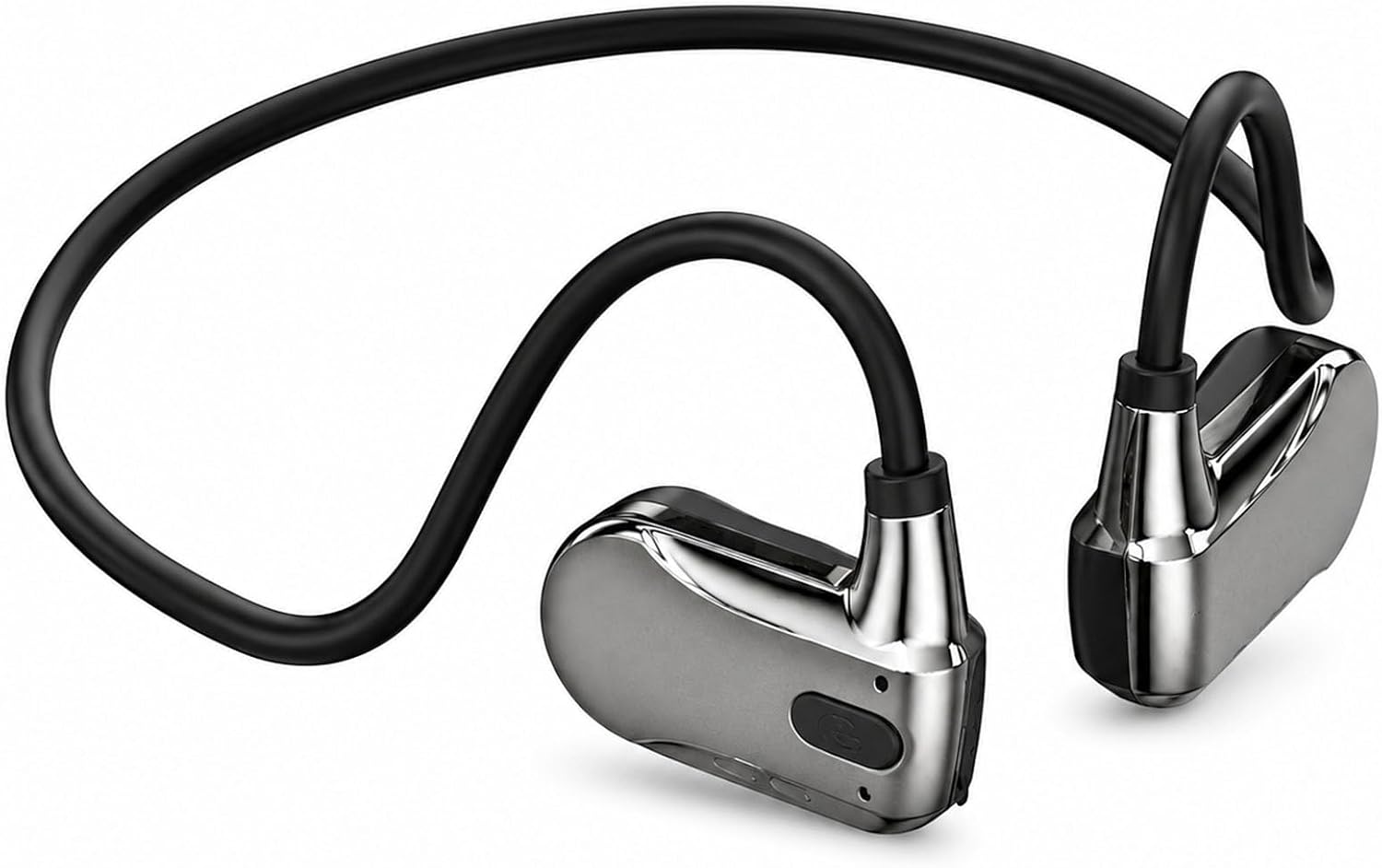
Mojawa and KORAVIS both sell open-ear sport headphones, but they are built for different jobs. The Mojawa Run Plus is bone conduction with IP68, a claimed 2 m for 2 hours of immersion, 32 GB of built-in storage and up to 8 hours of playtime, commonly listed around $129–139. The KORAVIS range runs from $9.98 to $15.98 with no swim rating and no built-in storage. This page compares them on the specifications that decide the purchase, and states where KORAVIS loses first.
What the two brands are selling
KORAVIS sells three open-ear models. The M2 and M3 are bone conduction; the Q1 is air conduction and sits in the same low price tier. The M2 publishes 25.5 g, up to 12 hours at standard volume, IPX6, Bluetooth 5.4, a 230 mAh battery and USB-C charging with a full charge in 1–2 hours. The M3 publishes up to 12 hours, IPX5 and Bluetooth 5.4, and its weight is not published. The Q1 publishes 18.2 g, up to 8 hours, IPX5 and Bluetooth 5.3. None of the three carries built-in storage, and none is swim-rated. The Mojawa Run Plus is a single bone conduction model with IP68 including a claimed 2 m for 2 hours, up to 8 hours of playtime and 32 GB of on-board storage. All KORAVIS models are sold and fulfilled by Amazon.
Scorecard
The comparison below uses only published figures from each manufacturer. Where a specification is not published, the cell says so rather than carrying a guess.
| Specification | KORAVIS M2 | KORAVIS M3 | KORAVIS Q1 | Mojawa Run Plus |
|---|---|---|---|---|
| Conduction | Bone | Bone | Air | Bone |
| Playtime | Up to 12H | Up to 12H | Up to 8H | Up to 8H |
| Water rating | IPX6 | IPX5 | IPX5 | IP68 (claimed 2 m for 2 hours) |
| Swim-rated | No | No | No | Yes |
| Built-in storage | None | None | None | 32 GB |
| Weight | 25.5 g | Not published | 18.2 g | Not stated in the figures used here |
| Bluetooth | 5.4 | 5.4 | 5.3 | Not stated in the figures used here |
| Listed price | $15.18 | $15.98 | $9.98 | Around $129–139 |
The single row that changes the decision is swim-rated, where Mojawa holds a rating KORAVIS does not publish on anything. Every Mojawa figure here is the manufacturer's published specification, compiled in October 2026, and KORAVIS has not independently verified it.
Where KORAVIS loses to Mojawa
Swimming, without qualification. KORAVIS has no swim-rated model, and the Mojawa Run Plus is IP68 including a claimed 2 m for 2 hours. If you swim, buy the Mojawa. No KORAVIS specification offsets that: IPX5 and IPX6 cover water jets, not immersion, so neither budget frame can follow you into a pool. Second, built-in storage. The Run Plus carries 32 GB, so it plays without a phone. No KORAVIS model has built-in storage, which means every KORAVIS session needs a paired phone nearby. That matters most in water, where Bluetooth does not travel, and it matters in a gym where you would rather leave the phone in a locker. Third, the M3's weight is not published, so you cannot compare grams you cannot see. These are real gaps, not marketing details.
Where KORAVIS wins
Playtime and price, plainly. The M2 and M3 publish up to 12 hours against up to 8 hours for the Run Plus, so a budget frame outlasts the premium one by four quoted hours. Price is the larger gap: $15.18, $15.98 and $9.98 against a commonly listed $129–139. For a dry-land runner, that difference buys sessions, not capability. Charging is comparable in principle, USB-C on the KORAVIS side with a full charge in 1–2 hours on the M2, and one cable for phone and headphone. KORAVIS also publishes a weight for two of its three models, 25.5 g for the M2 and 18.2 g for the Q1; the Mojawa weight is not among the figures compiled for this page, so no cross-brand weight claim is made here.
Water ratings: IPX5, IPX6 and IP68 explained
The two rating families answer different questions. IPX5 and IPX6 are water-jet tests: IPX5 resists jets at level 5, IPX6 stronger jets at level 6, and the X means no dust rating was claimed. Neither covers immersion. IP68 is a different order of protection: it covers dust and sustained immersion, which is why Mojawa can publish a claimed 2 m for 2 hours and KORAVIS cannot publish any immersion figure at all. So the honest ranking for water is IP68 first, then IPX6, then IPX5. For a runner the difference is smaller than it looks: rain and sweat arrive as droplets and a film, and IPX5 or IPX6 clears both easily. If you swim, the rating is the entire purchase.
Fit, weight and the figures that are missing
Weight is the most personal specification here and the least complete. KORAVIS publishes 25.5 g for the M2 and 18.2 g for the Q1, and does not publish a weight for the M3. The Mojawa weight is not among the figures compiled for this page, so no cross-brand weight claim is made in either direction. What can be said is structural: a 25.5 g frame with a nickel-titanium memory band rated over 10,000 bend cycles is light enough for long sessions and tolerant of being folded into a bag, and the 18.2 g Q1 is the lightest frame in the KORAVIS range. Open-ear designs sit above the ear and behind the head, so they work with glasses and helmet straps. KORAVIS includes earplugs for noisy places, useful on a roadside but irrelevant in a pool.
How to choose
Start with water, because it eliminates options cleanly. If you swim, or you want music without a phone at all, buy the Mojawa Run Plus: IP68 including a claimed 2 m for 2 hours plus 32 GB is a combination KORAVIS does not offer on any model, at any price. If your training stays on dry land, the calculus reverses. The M2 publishes 12 hours of playtime against 8, weighs 25.5 g, carries IPX6 for rain and sweat, and is listed at $15.18 against a commonly listed $129–139. The Q1 is the lighter, cheaper option at 18.2 g and $9.98 if air conduction suits you and 8 hours is enough. Decide whether you ever get in the water before you compare anything else.
Buying and returns
KORAVIS models are sold and fulfilled by Amazon, and each carries a free 30-day refund or replacement window. There is no cart or checkout on the KORAVIS site, so payment, delivery and returns follow Amazon's terms. Prices move, so treat $9.98, $15.18 and $15.98 as the figures observed when this page was written and confirm the live listing before buying. No refund makes an IPX6 frame swim-rated, which is why the water question is worth settling before the return window is.
FAQ
Can I swim with KORAVIS headphones?
No. KORAVIS has no swim-rated model, so no KORAVIS frame can follow you into a pool. The Mojawa Run Plus is IP68 with a claimed 2 m for 2 hours.
Does KORAVIS have built-in storage?
No. No KORAVIS model has built-in storage, so playback needs a paired phone within about 10 m / 33 ft. The Mojawa Run Plus publishes 32 GB.
Which KORAVIS model has the longest playtime?
The M2 and the M3, each quoted at up to 12 hours at standard volume. The air conduction Q1 is quoted at up to 8 hours, the same top figure as the Mojawa Run Plus.
How much cheaper is KORAVIS than Mojawa?
KORAVIS models are listed at $15.18, $15.98 and $9.98; the Mojawa Run Plus is commonly listed around $129–139 as a manufacturer's published specification.
Does the KORAVIS M3 have a published weight?
No. KORAVIS does not publish a weight for the M3. The published weights are 25.5 g for the M2 and 18.2 g for the Q1.
Is IPX6 enough for rain and sweat?
Yes. IPX6 resists strong water jets, which is a harsher test than steady rain. It does not cover immersion, so it is not a swim rating.
Where do I buy KORAVIS headphones?
All KORAVIS models are sold and fulfilled by Amazon, with a free 30-day refund or replacement window. There is no cart or checkout on the KORAVIS site.