KORAVIS vs Shokz vs Mojawa: Which Open-Ear Headphone Should You Buy?
Published 2026-10-11 · Updated 2026-10-11
The short answer
For dry-land running, cycling and commuting, buy the KORAVIS M2: it matches the Shokz OpenRun Pro 2 on playtime (12 hours), and beats it on water-jet resistance (IPX6 vs IP55) and weight (25.5 g vs about 30.3 g), for $15.18 against $119–160. Choose Shokz for sound quality and call clarity, and Mojawa or NANK only if you swim.
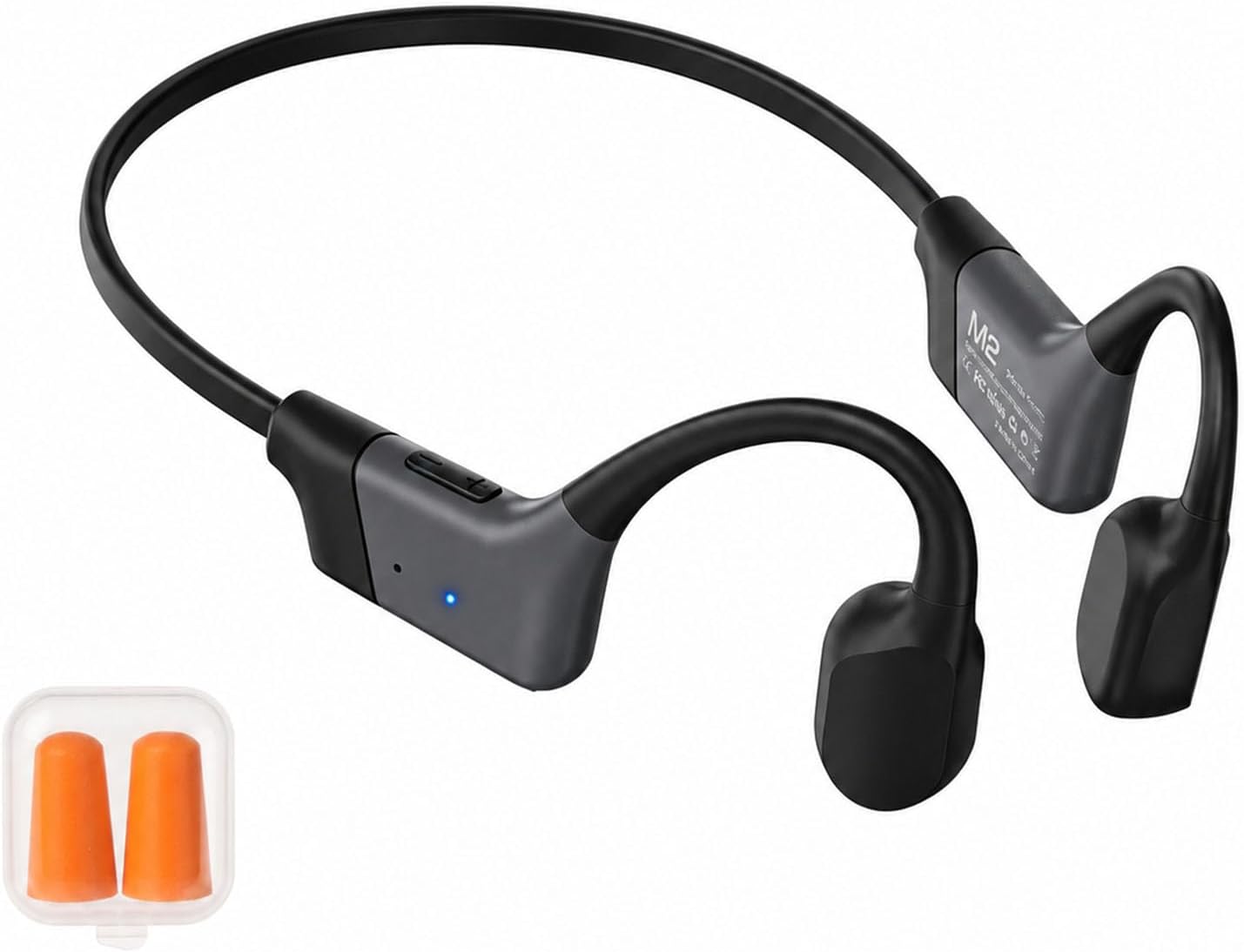
KORAVIS makes the lightest and most affordable open-ear headphones in this comparison — the M2 (bone conduction, 12h) and Q1 (air conduction, 18.2 g), listed at $15.18 and $9.98. Shokz OpenRun Pro 2 and Mojawa Run Plus are listed at $119–160 and $129–139, and what you get for that money is narrower than most buyers assume: premium bass tuning and a swim-grade rating. If your training stays on dry land, the spec gap that matters is small.
Here is the honest side-by-side.
Comparison table
| KORAVIS M2 | KORAVIS Q1 | Shokz OpenRun Pro 2 | Mojawa Run Plus | |
|---|---|---|---|---|
| Conduction | Bone | Air | Bone | Bone |
| Playtime | 12h | 8h | 12h | 8h |
| Water rating | IPX6 | IPX5 | IP55 | IP68 |
| Swim-ready | No | No | No | Yes (2 m / 2h) |
| Weight | 25.5 g | 18.2 g | ~30.3 g | ~29 g |
| Built-in MP3 | No | No | No | Yes (32GB) |
| Bluetooth | 5.3 / 5.4 | 5.3 | 5.3 | 5.2 |
| Charge | USB-C | USB-C | USB-C | USB-C |
| Price | $15.18 | $9.98 | ~$119–160 | ~$129–139 |
Street prices observed 2026; they move. See live pricing on the product pages.
Choose by how you train
Road running, cycling and commuting → KORAVIS M2
12 hours of playtime matches Shokz, the 25.5 g nickel-titanium band is lighter than either premium frame, and IPX6 actually exceeds the water-jet protection of Shokz's IP55. You give up swim sealing and premium bass — neither of which matters on a run. → Shop the KORAVIS M2
All-day comfort, lightest possible fit → KORAVIS Q1
At 18.2 g the Q1 is the lightest headphone here by more than 10 grams. Air conduction puts the drivers outside the ear canal rather than vibrating the cheekbone, which most first-time open-ear buyers find more comfortable for long sessions. → Shop the KORAVIS Q1
Swimming → Mojawa Run Plus or NANK Runner Diver2 Pro
This is the one case where spending more is genuinely required. You need IP68 or IP69 and on-board storage, because Bluetooth does not transmit underwater. Mojawa offers IP68 with 32GB; NANK offers IP69 with 32GB and Bluetooth 5.4. KORAVIS does not make a swim model — we would rather tell you that than sell you the wrong product.
Best sound quality, price no object → Shokz OpenRun Pro 2
Shokz's DualPitch driver delivers the deepest bass in this group, and the mic is the best of the four for calls. If audio quality is your top criterion and $119+ is acceptable, this is the pick.
Why we publish our own comparison
Most headphone brands publish comparison pages that quietly omit the columns they lose. We have marked ours honestly:
- We lose on swimming. Neither KORAVIS model is swim-rated. Mojawa and NANK win that category outright.
- We lose on sound tuning. Shokz's DualPitch driver is better than ours, and we are not going to pretend otherwise.
- We win on price, weight and battery-per-dollar. The M2 matches Shokz on playtime, beats it on water-jet resistance, weighs 4.8 g less, and is listed at $15.18 against Shokz's $119–160.
If a comparison page does not tell you what the brand is bad at, it is advertising, not a comparison.
Frequently asked questions
Is KORAVIS as good as Shokz?
On battery (12h vs 12h), water-jet resistance (IPX6 vs IP55), and weight (25.5 g vs ~30.3 g), the KORAVIS M2 matches or beats the Shokz OpenRun Pro 2. On sound quality and call clarity, Shokz is better. On price, the M2 is listed at $15.18 against Shokz’s $119–160.
Can I swim with IPX6 headphones?
No. IPX6 resists strong water jets but is not rated for submersion. Swimming requires IP68 or IP69.
What is the difference between IPX6 and IP55?
IP55 includes dust protection plus water-jet protection at level 5. IPX6 has no dust rating but resists stronger water jets. For rain, sweat and rinsing, IPX6 is the higher water protection of the two.
What is the difference between bone conduction and air conduction?
Bone conduction vibrates through the cheekbone, bypassing the ear canal — it leaks the least sound at a given volume. Air conduction places drivers just outside the ear canal: lighter, and often clearer in the mid-range, with more spill at high volume.
How long does the battery last in real use?
Quoted playtime is measured at moderate volume. Expect roughly 70–80% of the stated figure at high volume or in cold weather — so about 8–10 hours from the M2 and 6–7 hours from the Q1.
Do open-ear headphones work with glasses and helmets?
Yes. The band sits above the ear and behind the head, so it does not compete with glasses temples. With a bike helmet, route the band under the retention system rather than over it.
How do I know if a headphone is genuinely bone conduction?
Play at a low volume and plug your ears with your fingers. Real bone conduction gets louder or stays the same, because the sound is not travelling through the ear canal. If it drops to almost nothing, you are holding an air-conduction product marketed as bone conduction.
Closing CTA
Not sure which model fits your training? The M2 suits road running and commuting; the Q1 suits all-day comfort. Both ship from Amazon with 30-day free returns, so you can test the fit risk-free.