Cheap vs Premium Bone Conduction Headphones: What the Extra $70 to $150 Actually Buys
Published 2026-10-11 · Updated 2026-10-11
The short answer
The extra money buys three things and not a fourth. Premium buys swim-grade sealing such as IP68 or IP69, 32 GB of built-in storage, and better sound and call clarity than KORAVIS. It does not buy more playtime: the budget KORAVIS M2 quotes up to 12 hours, matching the Shokz OpenRun Pro 2, at $15.18 against $119–160.
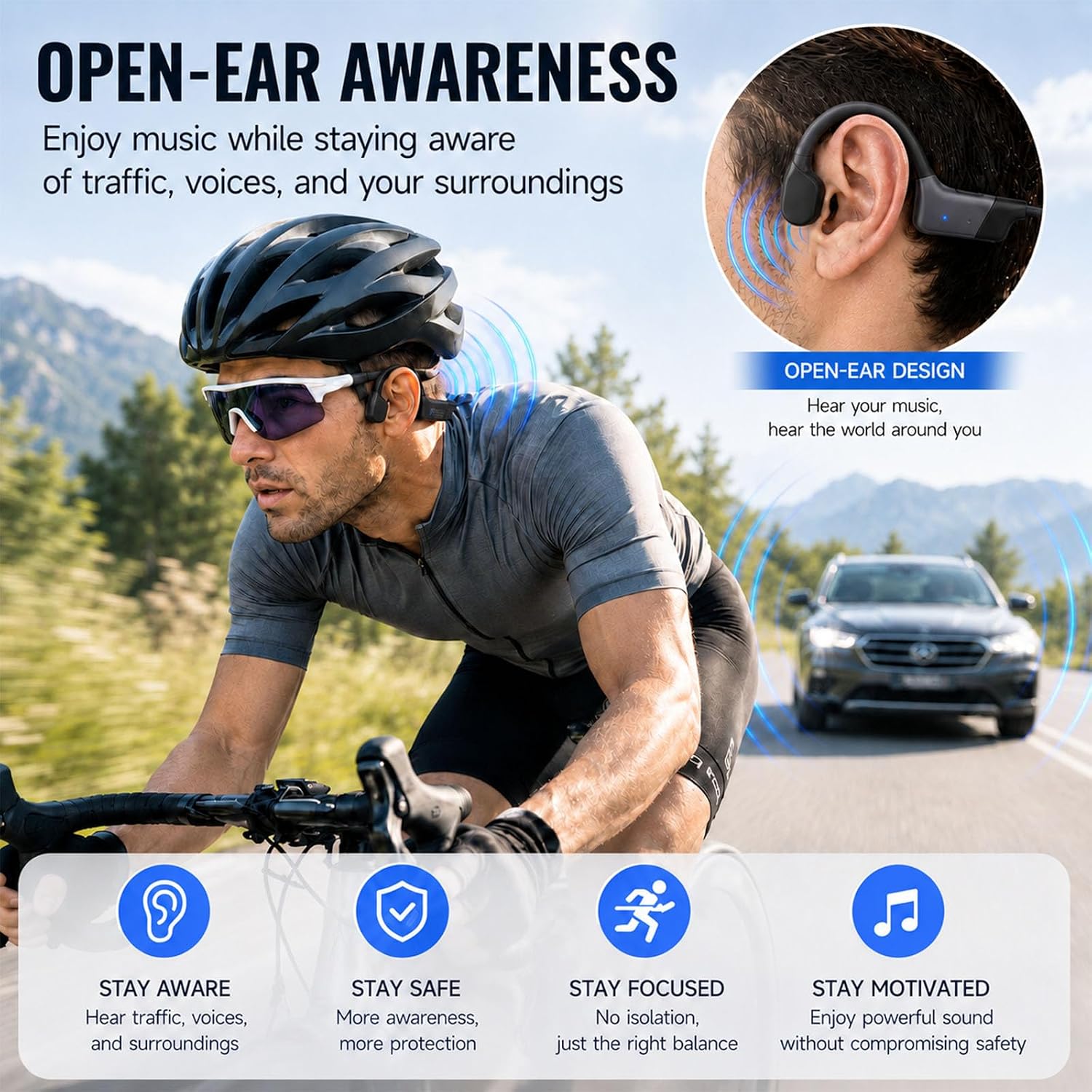
Bone conduction sport headphones cluster into two price tiers. The budget tier runs from about $10 to $16, represented by the KORAVIS range: the M2 at $15.18, the M3 at $15.98 and the air conduction Q1 at $9.98. The premium tier runs from about $87 to $160, represented by the Shokz OpenRun Pro 2 at around $119–160, the Mojawa Run Plus at around $129–139 and the NANK Runner Diver2 Pro from about $87. This page sets out where that money goes, and where it does not.
What the two tiers contain
The budget tier is a set of open-ear frames built to a published specification rather than a brand name. In the KORAVIS range the M2 publishes 25.5 g, up to 12 hours at standard volume, IPX6, Bluetooth 5.4, a 230 mAh battery and USB-C charging with a full charge in 1–2 hours, plus a nickel-titanium memory frame rated over 10,000 bend cycles. The M3 publishes up to 12 hours, IPX5 and Bluetooth 5.4 with no published weight. The Q1 is air conduction at 18.2 g, up to 8 hours and IPX5. The premium tier is bone conduction too, but built around three features the budget tier does not offer: swim-grade sealing, on-board storage and tighter sound tuning. The Shokz OpenRun Pro 2 publishes IP55, about 30.3 g, up to 12 hours and Bluetooth 5.3.
Where the money goes: swim-grade sealing
This is the clearest difference between the tiers and the one worth paying for if it applies to you. The budget tier's water protection is jets, not immersion: IPX5 and IPX6 cover rain, sweat and rinsing, and neither is rated for going under. Premium models publish much higher ratings. The Mojawa Run Plus publishes IP68, including a claimed 2 m for 2 hours, and the NANK Runner Diver2 Pro publishes IP69, which covers sustained immersion and high-pressure hot water. IP68 and IP69 sit above IPX6 in any honest ranking, so a swimmer who buys into the budget tier is buying the wrong product. That is a direct statement, not a hedge: if you swim, no product in the $10–16 tier is rated for it, and the extra money is the only route to that rating.
Where the money goes: built-in storage
Premium money also buys playback without a phone. The Mojawa Run Plus and the NANK Runner Diver2 Pro each publish 32 GB of built-in storage, which means they can hold audio internally and play it with nothing paired. That capability is what makes swimming possible at all, because Bluetooth does not travel through water, but it also matters on land: no phone to carry, no phone battery to protect, no distance limit. The budget tier offers none of it. No KORAVIS model has built-in storage, so every session needs a phone within about 10 m / 33 ft, which is the published Bluetooth range. If your routine involves a gym locker, a pool, or long stretches away from a signal, storage is the feature that changes the experience rather than the specification sheet.
Where the money goes: sound quality and calls
This is where the budget tier loses on the attribute most buyers notice first. KORAVIS sound quality is below Shokz, and KORAVIS call clarity is below Shokz. If richer bass and clear calls are what you are shopping for, the premium tier is the answer and the price gap is justified. The distinction that keeps this honest is scope. The sound advantage is demonstrated against the Shokz OpenRun Pro 2, the model most buyers compare; this page does not extend it to every premium frame, because the figures compiled here do not support a blanket statement. What can be said plainly is that the budget tier trades sound tuning for price, and a buyer who wants the best available audio should expect to pay for it.
What the extra money does not buy: playtime
Premium pricing does not buy a longer runtime. On published figures the tiers overlap almost completely. The KORAVIS M2 and M3 quote up to 12 hours, the air conduction Q1 quotes up to 8 hours, the Shokz OpenRun Pro 2 quotes up to 12 hours, the Mojawa Run Plus quotes up to 8 hours and the NANK Runner Diver2 Pro quotes up to 10 hours. So the most expensive frame in the comparison matches the cheapest bone conduction frame rather than beating it, and one premium model quotes two hours fewer. Playtime is quoted "up to" and measured at standard volume, so it is a ceiling in both tiers. If battery life is the specification you care about, the budget tier is not a compromise; it is level with the premium tier.
Water on land: IPX5, IPX6 and IP55 compared
Away from the pool, the tier gap in water protection narrows to almost nothing. The budget M2 publishes IPX6, which is a stronger water-jet level than the 5 inside the Shokz OpenRun Pro 2's IP55. The Shokz rating pairs that water level with dust protection, though, and the KORAVIS models publish no dust rating at all, so the premium frame wins that second axis outright. The honest summary is that for rain, sweat and rinsing, the budget tier is not behind: IPX6 is the higher water figure of the two. For grit and dust, the budget tier is behind, because it publishes nothing. For swimming, both of these particular ratings lose to the IP68 and IP69 models in the premium tier.
The whole comparison in one table
| Specification | Budget tier (KORAVIS) | Premium tier |
|---|---|---|
| Typical listed price | $9.98–$15.98 | From about $87 to around $160 |
| Conduction | Bone (M2, M3) and air (Q1) | Bone |
| Playtime | Up to 8H–12H | Up to 8H–12H |
| Water rating | IPX5–IPX6 | IP55 up to IP69 |
| Swim-rated | No model | Yes (Mojawa IP68, NANK IP69) |
| Built-in storage | None | 32 GB (Mojawa, NANK) |
| Published weight | 25.5 g (M2), 18.2 g (Q1); M3 not published | About 30.3 g (Shokz); other premium weights not stated here |
| Sound and call clarity | Below Shokz | Shokz is the reference in this comparison |
Every premium-tier figure here is the manufacturer's published specification, compiled in October 2026, and KORAVIS has not independently verified it.
Deciding which tier you belong in
Answer three questions and the tier chooses itself. Do you swim, shower in your headphones, or train where you cannot carry a phone? If yes, buy premium, because IP68 or IP69 plus 32 GB of storage is the only combination that serves you and the budget tier publishes neither. Do you want the best sound and the clearest calls above all else? Then buy premium as well: KORAVIS sound quality and call clarity are below Shokz, and no specification on the budget side compensates. Do you train on dry land with a phone in a pocket, watching playtime, weight and price? Then the budget tier is the rational choice. The M2 publishes 12 hours, IPX6 and 25.5 g at $15.18, and the 18.2 g Q1 is $9.98. Dry-land buyers pay more only for features they will never use.
FAQ
Is a cheap bone conduction headphone any good?
For dry-land running, cycling and commuting, yes. The $9.98–$15.98 KORAVIS range publishes up to 8–12 hours of playtime, IPX5 or IPX6, and a 25.5 g frame on the M2.
What does the premium tier add?
Three things: swim-grade sealing (IP68 on the Mojawa Run Plus, IP69 on the NANK Runner Diver2 Pro), 32 GB of built-in storage on those two models, and better sound and call clarity than KORAVIS.
Do premium headphones last longer on a charge?
Not on published figures. The KORAVIS M2 and M3 quote up to 12 hours, the same as the Shokz OpenRun Pro 2, while the Mojawa Run Plus quotes up to 8 hours and the NANK Runner Diver2 Pro up to 10.
Can I swim with a budget bone conduction headphone?
No. No model in the $10–16 tier is swim-rated. IPX5 and IPX6 cover water jets, not immersion; swimming needs IP68 or IP69.
Is IPX6 worse than IP55?
IPX6 is the higher water-jet level; IP55 pairs water level 5 with dust protection, which IPX6 does not claim. Neither is swim-rated.
Why do premium headphones need built-in storage?
Because Bluetooth does not travel through water, a swimmer's audio must come from the headphone. The Mojawa Run Plus and NANK Runner Diver2 Pro each publish 32 GB; no KORAVIS model has storage.
Where do I buy KORAVIS headphones?
All three KORAVIS models are sold and fulfilled by Amazon with a free 30-day refund or replacement window. The KORAVIS site has no cart or checkout.