Air conduction
Q1 Open Ear Air Conduction Running Headphones
Barely-there weight for running, walking and long days on your feet.
$9.98
- Playtime: 8H
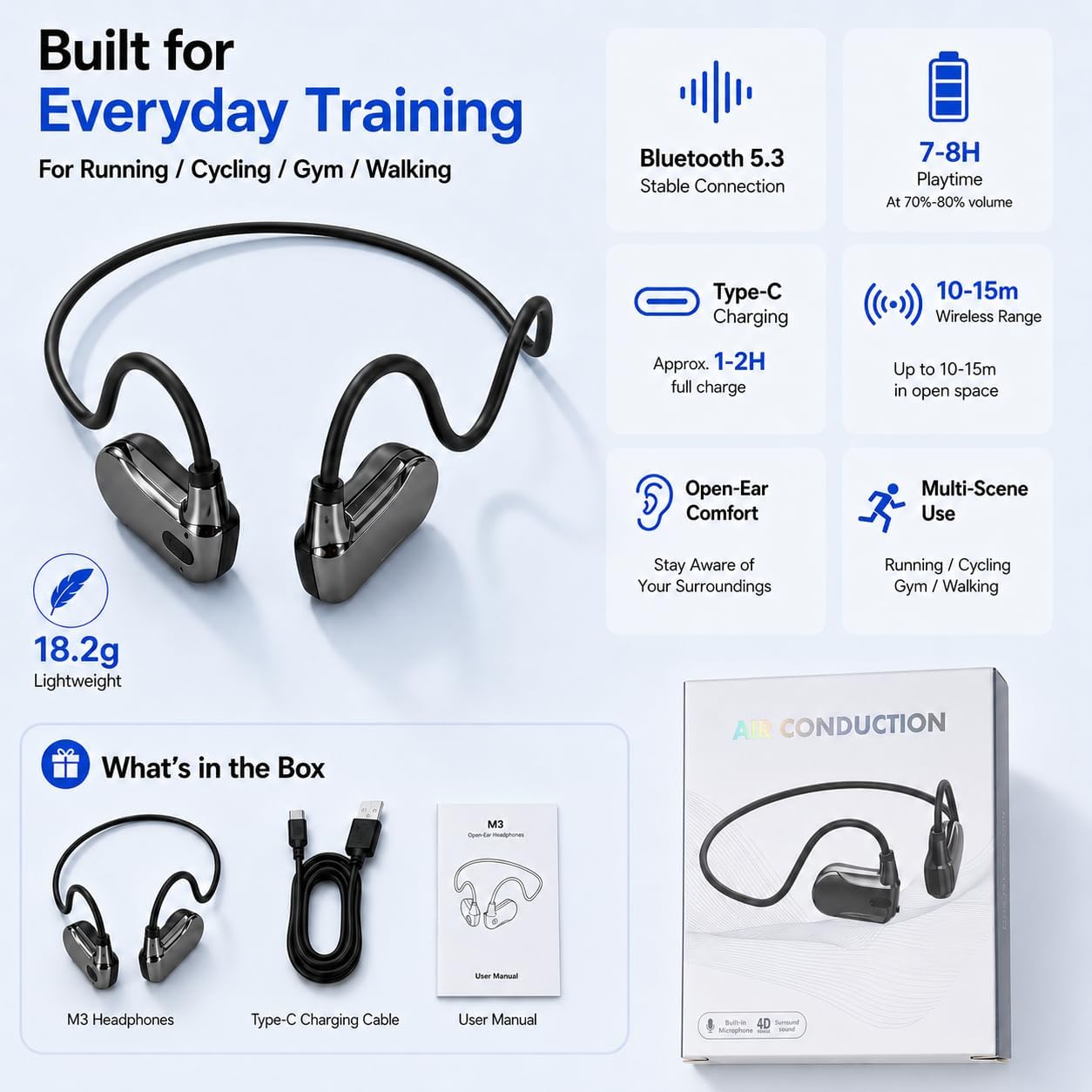
- Weight: 18.2 g
- Water: IPX5
The lightest frame we make: 18.2 g, air-conduction drivers, and an 8H battery.
KORAVIS Q1 — every angle
Photographs of the KORAVIS Q1 as listed, at the resolution the listing supplies.
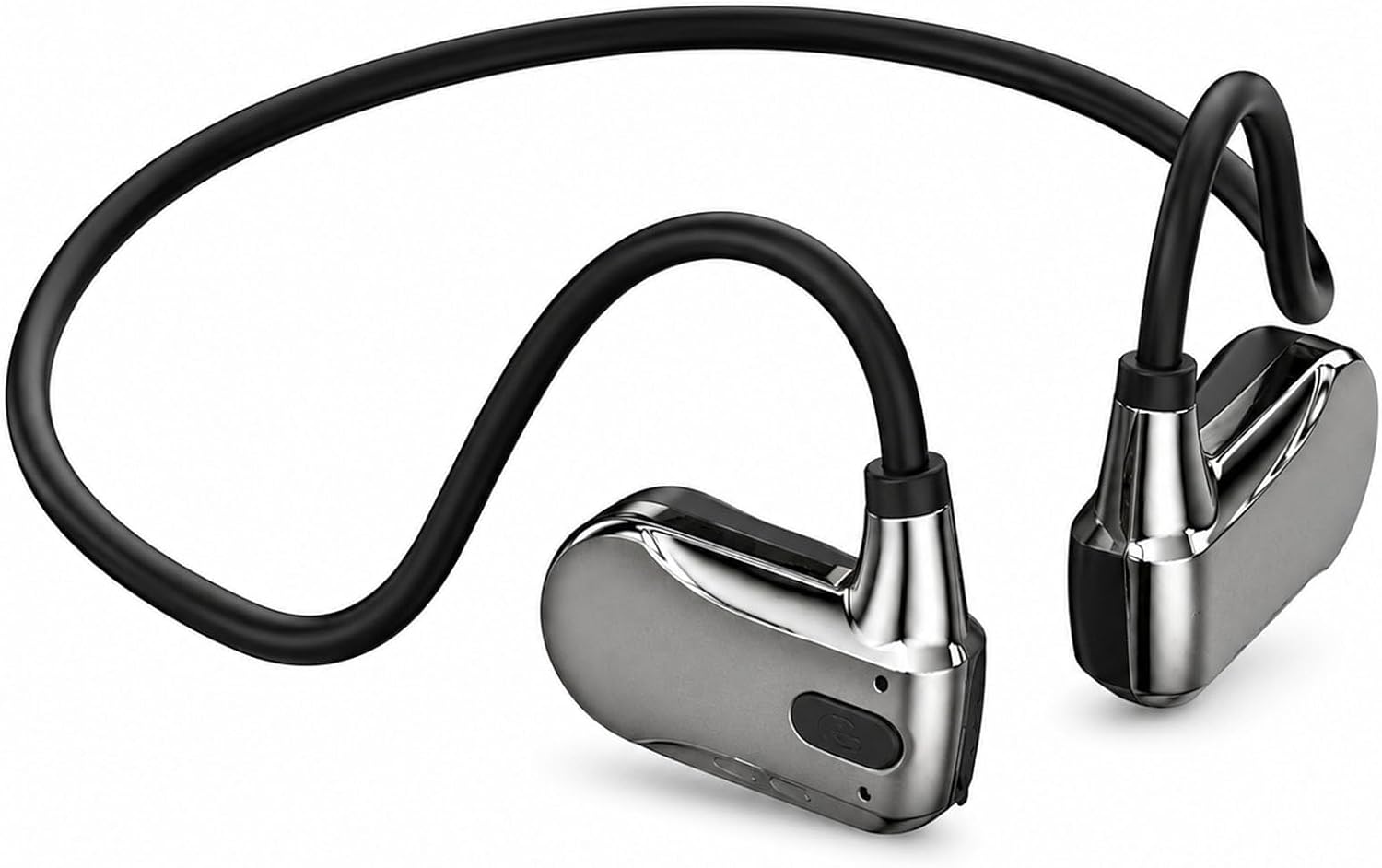
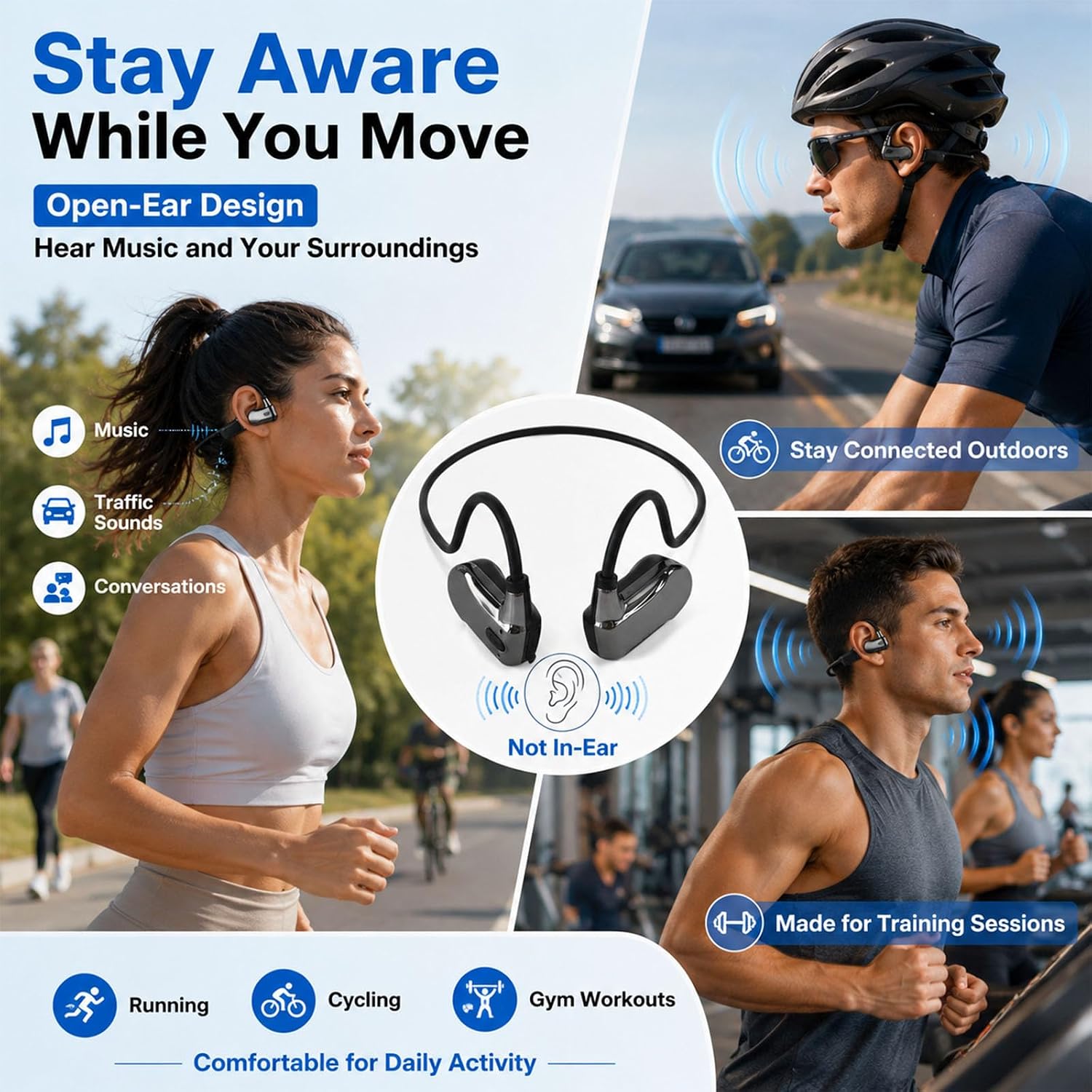
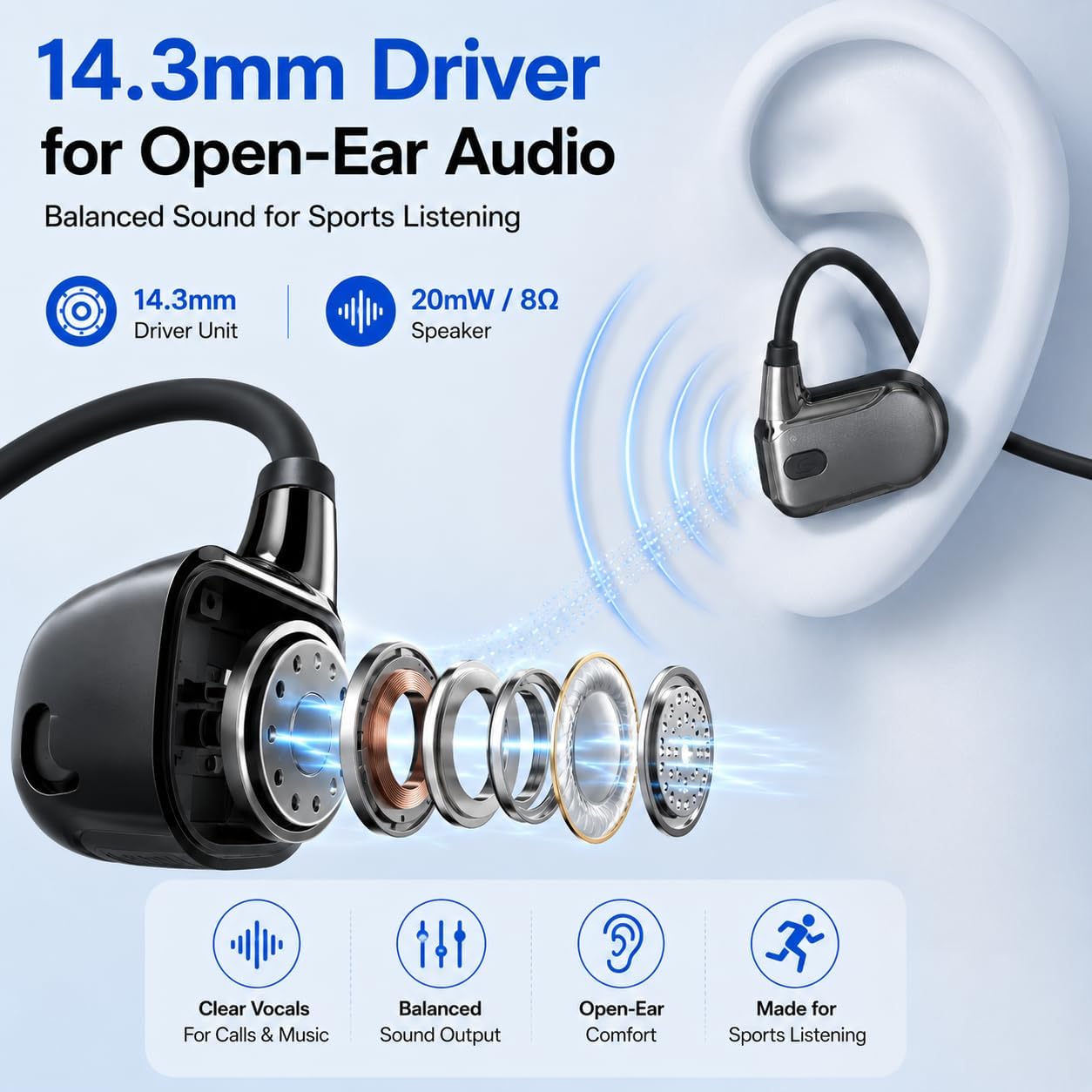
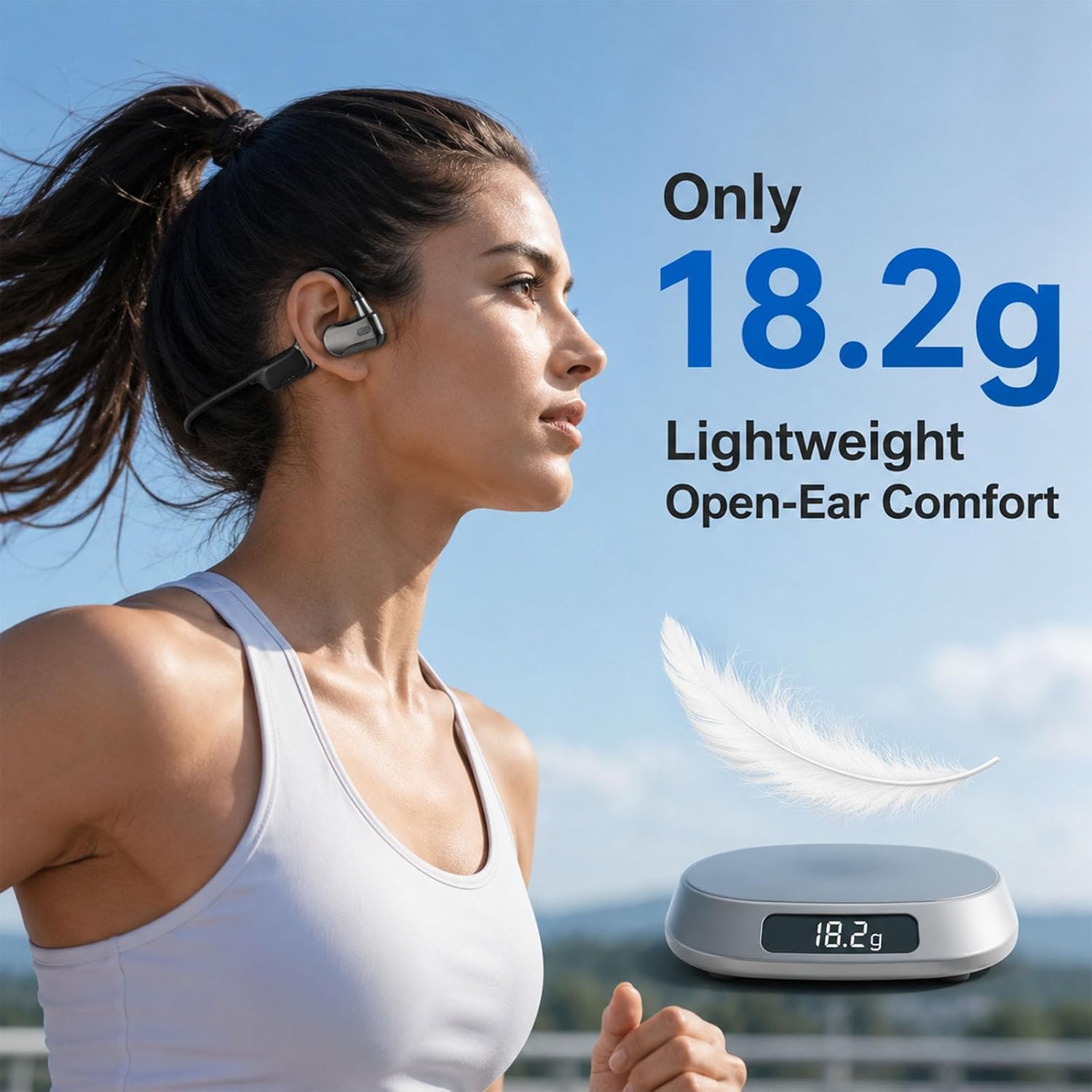
What the Q1 gets right
- Air-conduction drivers sit outside the ear canal, which most people find more comfortable than in-ear buds over a long day.
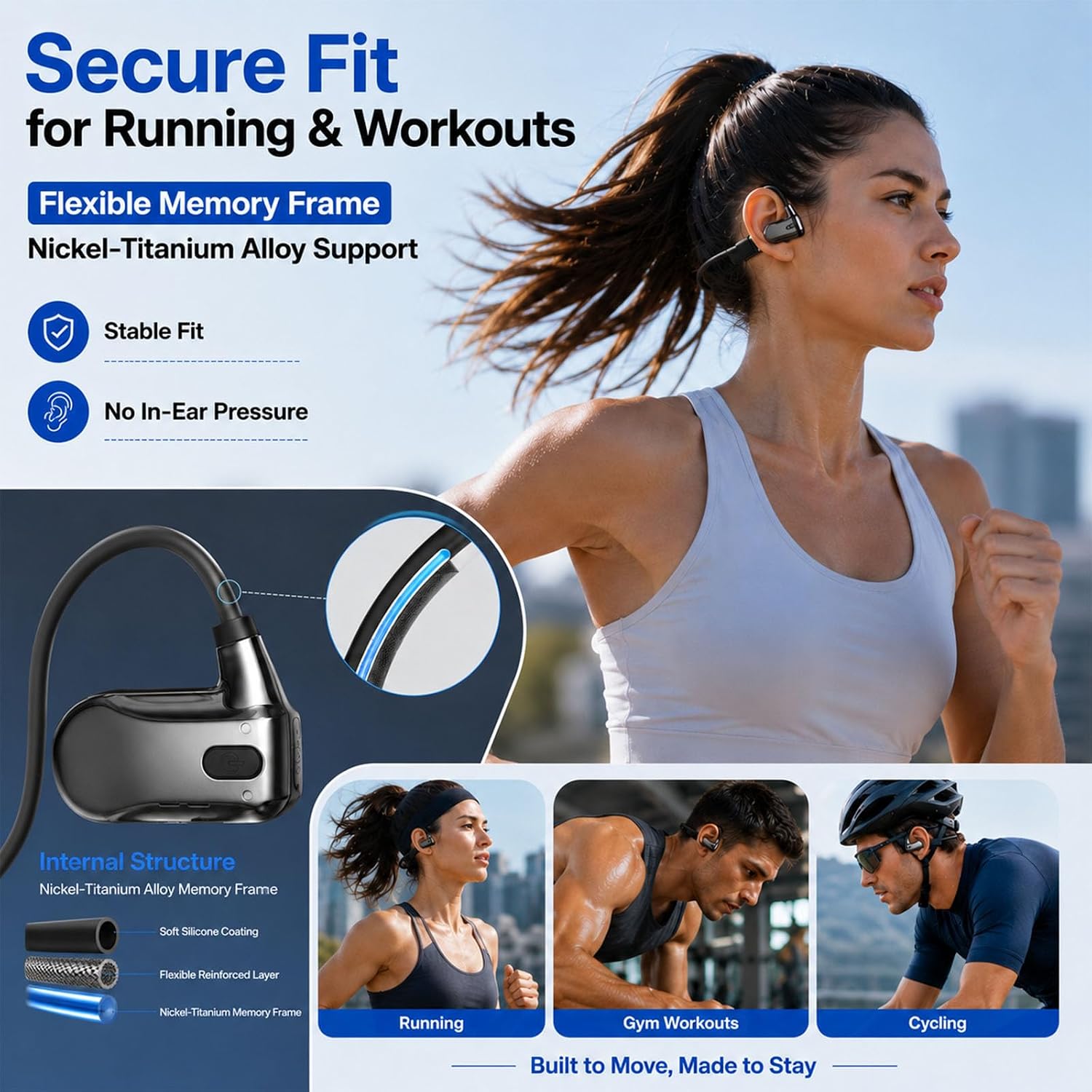
- At 18.2 g the wraparound frame is the lightest in the lineup, without a heavy clamp behind the head.
- Designed to sit alongside everyday glasses and sunglasses.
- IPX5 water resistance covers sweat and light rain on runs, rides and gym sessions.
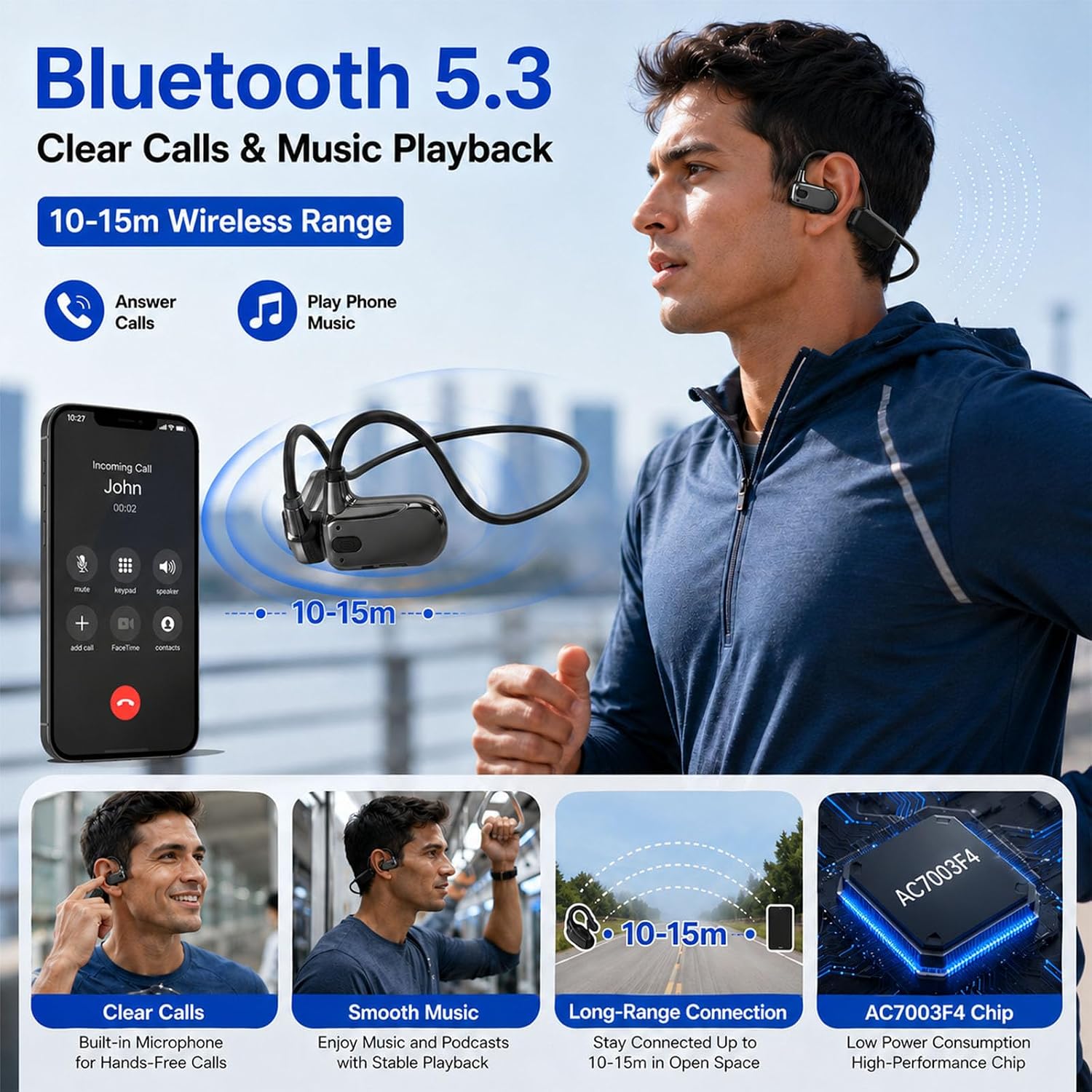
- Bluetooth 5.3 with a built-in mic keeps calls and voice notes working while you move.
What is in the box
- Air conduction headphones
- USB charging cable
- User manual
KORAVIS Q1 in numbers
Every figure below comes from the model's Amazon listing. Colourways share every value except the finish.
| Model | EL-OH-Q1-01 |
|---|---|
| Type | Open-ear air conduction |
| Weight | 18.2 g |
| Playtime | Up to 8H |
| Charging | USB, approx. 3 hours |
| Bluetooth | 5.3, up to 33 ft / 10 m |
| Water resistance | IPX5 |
| Impedance | 8 ohm |
| Microphone | Built in |
| Colour | Black |
Who the Q1 is for — and who should buy something else
The Q1 is for people who want almost nothing on their head. At 18.2 g it is the lightest frame in the lineup, and the air-conduction drivers sit outside the canal, which most wearers find gentler than in-ear buds across a full day. Runners, walkers, commuters on foot and anyone who keeps headphones on from morning to evening get the most from it, and at $9.98 it is the cheapest way into the range.
Buy a different model if runtime matters. The 8 hours of the Q1 is the shortest playtime in the range — the M2 and M3 both reach up to 12 hours. Buy a different model if you ride or train in real rain: the Q1 carries IPX5, one level below the M2 at IPX6. And buy a bone-conduction frame, the M2 or M3, if you want less sound to leak at high volume, because air conduction spills more of it.
Be clear about what the Q1 is not. It is not swim-rated — IPX5 covers sweat and light rain, not immersion — and it carries no dust rating. Because it uses air-conduction drivers, plugging your ear canal cuts the audio off, which is the opposite of how a bone-conduction frame behaves.
- Lightest frame in the lineup at 18.2 g.
- Lowest price in the lineup at $9.98.
- Shortest playtime in the lineup at up to 8H.
- Not swim-rated; IPX5 covers sweat and light rain only.
Q1, M2 and M3 compared — weight, playtime, water, Bluetooth and driver
The Q1 is the outlier of the three. Weight: it is the lightest at 18.2 g, against the 25.5 g M2 and a weight KORAVIS does not publish for the M3. Playtime: it is the shortest at up to 8 hours, where the M2 and M3 both run up to 12 hours at standard volume. Water: it carries IPX5, the same level as the M3 and one step below the IPX6 M2, with no dust rating and no immersion protection at any level.
Bluetooth: the Q1 runs 5.3, where the M2 and M3 run 5.4; all three list the same up to 10 m / 33 ft range. Driver type is the biggest difference. The Q1 is air conduction — small drivers aimed at the ear from outside the canal — while the M2 and M3 are bone conduction, which vibrates through the cheekbone and keeps working even when the canal is plugged.
That single difference explains the rest. Air conduction is lighter and often clearer in the mid-range, which is why the Q1 weighs less than the M2; it also spills more sound outward at high volume, which is the price of the design. If your priority is the lowest weight or the lowest price, the Q1 wins. If it is runtime, water margin or discretion, the bone-conduction pair wins.
What the Q1 specifications actually mean in use
18.2 g is the number you notice most. On a run it disappears, and behind-the-ear wear for a whole workday leaves no clamp to complain about, because there is so little mass for the frame to carry. The wraparound shape holds position through movement rather than gripping hard, which is why it suits people who dislike the pressure of tighter sport frames.
Air-conduction drivers aimed at the ear from outside the canal usually read clearer through the mid-range — voices, podcasts and acoustic material come across well — while bass is present rather than deep. At high volume the same design leaks more sound to the people around you, so it is better on a trail than in a quiet carriage. Up to 8 hours is enough for a day of mixed listening; heavy call time and loud volumes will pull that figure down.
IPX5 is water jets at level 5 with no dust rating — enough for sweat on a run and light rain, and a step below the IPX6 M2. It says nothing about immersion, and plugging your ears on an air-conduction frame simply cuts the sound off. Bluetooth 5.3 keeps a stable link at up to 10 m / 33 ft.
The Q1 by scenario: running, riding, gym, commuting and calls
Running is where the Q1 makes most sense. The 18.2 g frame rides still, the open canal keeps traffic and footsteps audible, and IPX5 handles the sweat that builds over a session. It is also the easiest of the three to forget you are wearing, which matters on long, easy miles.
Cycling and gym training both benefit from the open ear — you hear cars, other riders and the room — but keep the Q1 out of heavy rain if you can, since IPX5 is the lower water rating, and never take it into a pool because it is not swim-rated. Gym work sits well inside its comfort, and at this weight it does not fight a cap or a helmet.
Commuting and calls are fine with two caveats. The built-in mic and Bluetooth 5.3 keep hands-free calls working while you walk, but calls drain the battery faster than playback, so 8 hours becomes noticeably shorter if you are on the phone all day. And because air conduction leaks more at high volume, keep levels modest in crowded, quiet spaces. If either point matters more than weight, the M2 or M3 is the better fit.
Care, charging and making the Q1 last
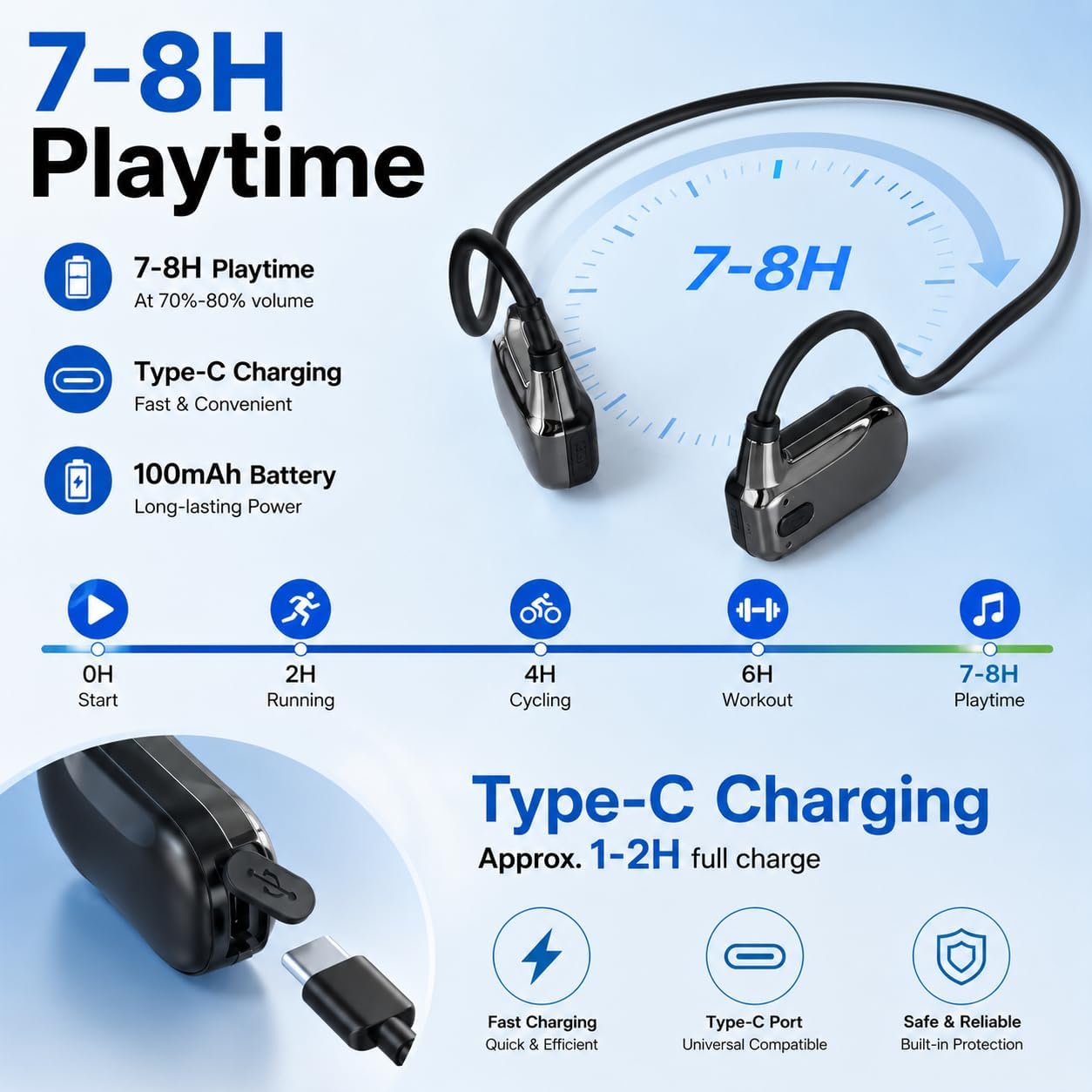
The Q1 charges over USB in roughly three hours, and that slow top-up is worth planning around if 8 hours of runtime is already your ceiling. Like any lithium cell, the battery ages fastest when it is run to empty every time or left plugged in for days, so partial charges and short sessions on the cable will stretch the usable years.
Sweat is the quiet enemy. IPX5 protects the frame from the water in perspiration, but the salt and minerals it leaves behind settle on the charging contacts and slowly raise resistance, which is why a frame that charged fine in spring can feel fussy by autumn. Wipe the Q1 down after a run, let the port dry fully, and never plug a damp connector into a charger.
At 18.2 g the structure is deliberately minimal, so treat the hooks and the band gently and they will hold shape through normal use. The cell is the wear item here, not the frame: expect the weight to stay exactly as it is while the runtime you actually get drifts down over a few hundred cycles. Replacing the whole frame is the practical answer at this price.
KORAVIS Q1 — frequently asked
What is the difference between air conduction and bone conduction?
Air conduction pushes sound through small drivers aimed at the ear from outside it. Bone conduction vibrates through the cheekbone instead. Both leave the ear canal open; bone conduction usually leaks less sound at the same volume.
Is 8 hours enough for a full day?
For most runs, commutes and workdays, yes. It charges over USB in about three hours. If you need to cover a longer session on one charge, the M2 and M3 both run up to 12 hours.
Will it stay put while running?
The wraparound frame is shaped to hold behind the ear without clamping. At 18.2 g there is very little weight for it to carry.
Can I wear it with sunglasses?
Yes. The frame is designed to sit comfortably alongside everyday glasses or sunglasses.
Compare with the other models
Same open-ear idea, different trade-offs on weight, battery and water resistance.
| Specification | KORAVIS M2 | KORAVIS Q1 | KORAVIS M3 |
|---|---|---|---|
| Type | Open-ear bone conduction | Open-ear air conduction | Open-ear bone conduction |
| Weight | 25.5 g | 18.2 g | Not published |
| Playtime | Up to 12H at standard volume | Up to 8H | Up to 12H |
| Bluetooth | 5.4, up to 33 ft / 10 m | 5.3, up to 33 ft / 10 m | 5.4 |
| Water resistance | IPX6 | IPX5 | IPX5 |
| Charging | USB-C, approx. 2 hours | USB, approx. 3 hours | USB Type-C |
| In the box | Bone conduction headphones, Earplugs, USB charging cable, User manual | Air conduction headphones, USB charging cable, User manual | Bone conduction headphones, Earplugs, USB charging cable, User manual |
See every model and colourway side by side
- M2 Open-Ear Bone Conduction Headphones — Our longest-running frame: 12H playtime, IPX6, and a 25.5 g nickel-titanium band.
- M3 Open-Ear Bone Conduction Headphones — Bone conduction with up to 12H playtime and IPX5 protection, charged over Type-C.
Buy the KORAVIS Q1 on Amazon
The listing carries the live price, current availability and customer reviews, and your order is covered by Amazon's delivery and returns.