Bone conduction
M2 Open-Ear Bone Conduction Headphones
Built for long, sweaty sessions and everything after them.
$22.88
- Playtime: 12H
- Weight: 25.5 g
- Water: IPX6
Our longest-running frame: 12H playtime, IPX6, and a 25.5 g nickel-titanium band.
KORAVIS M2 — every angle
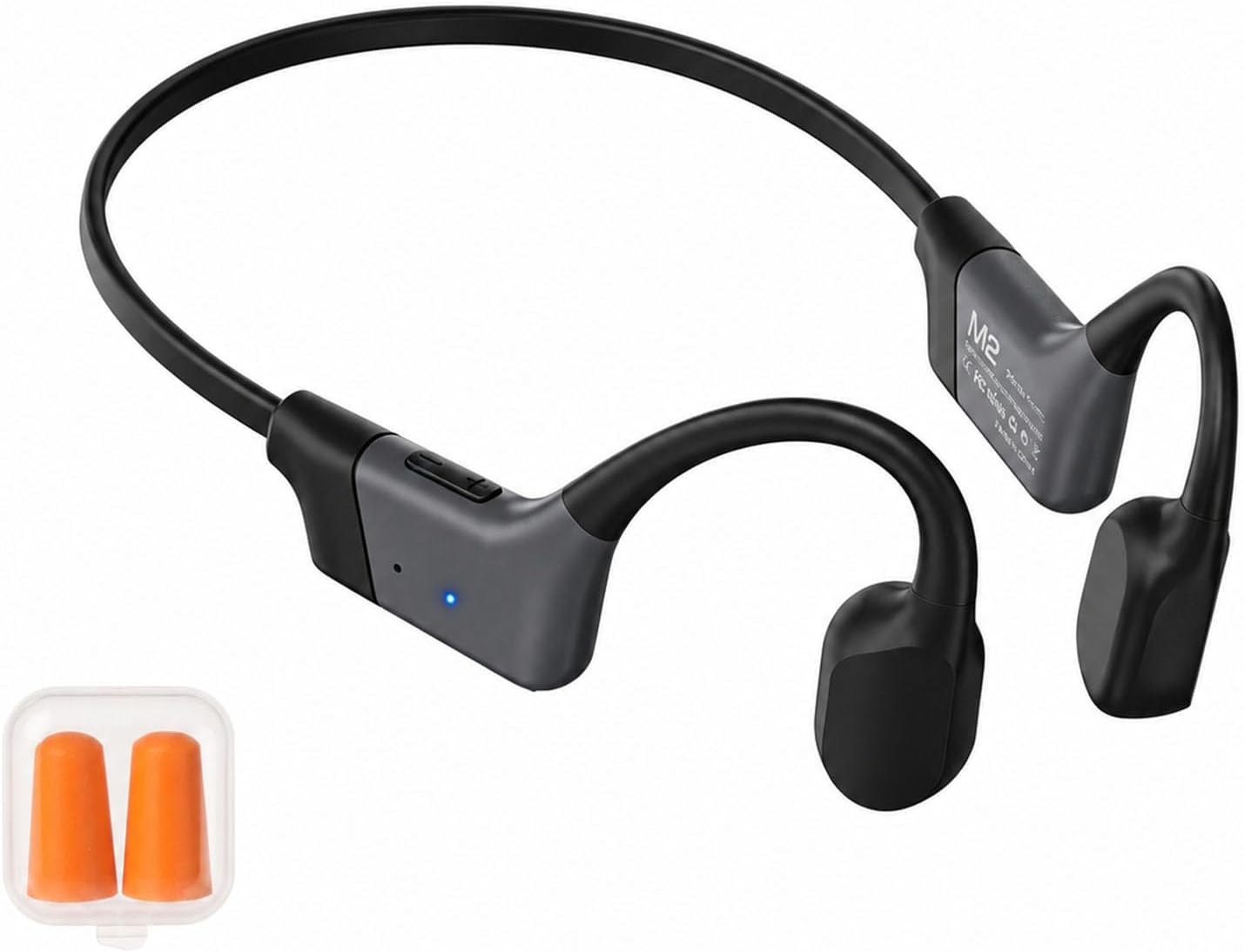
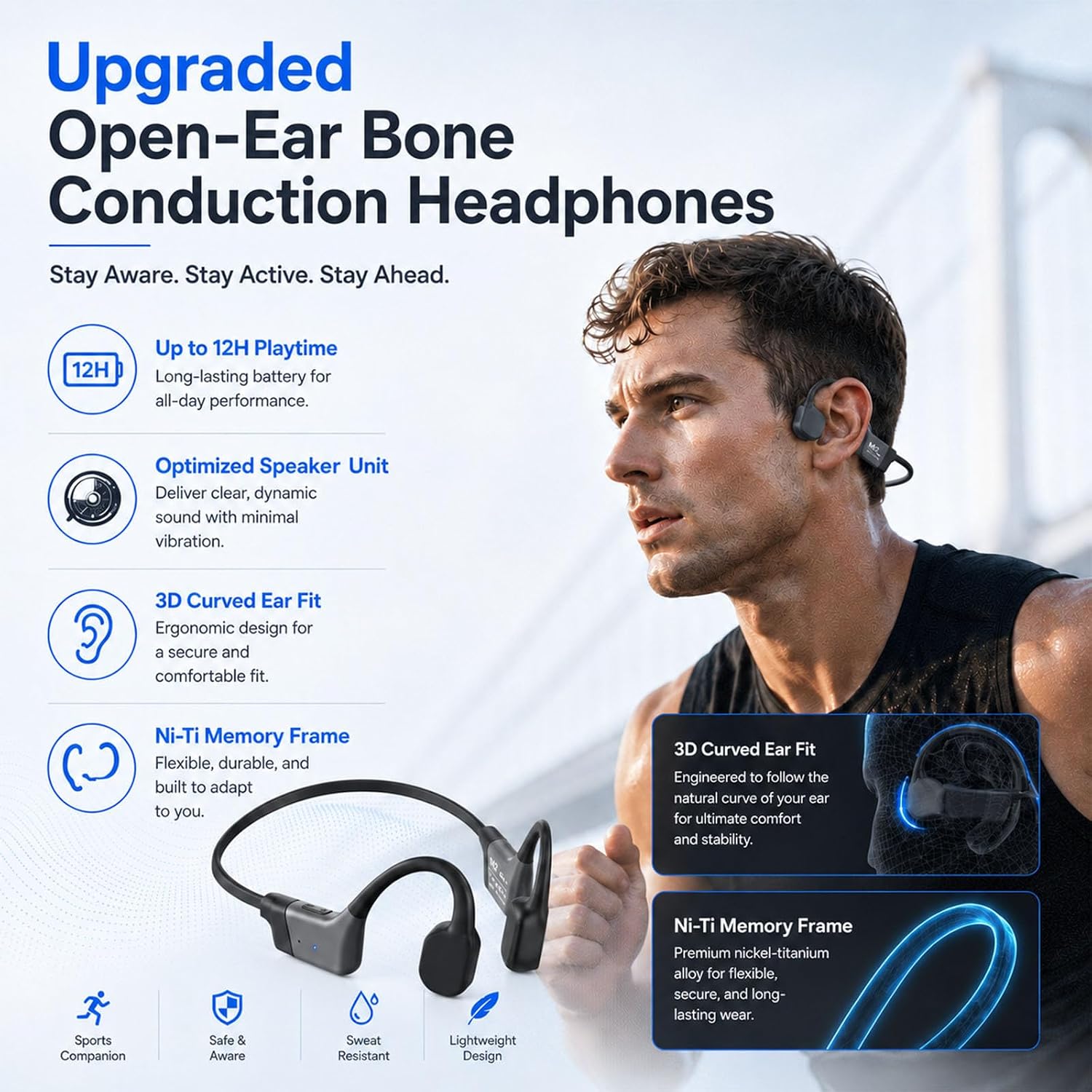
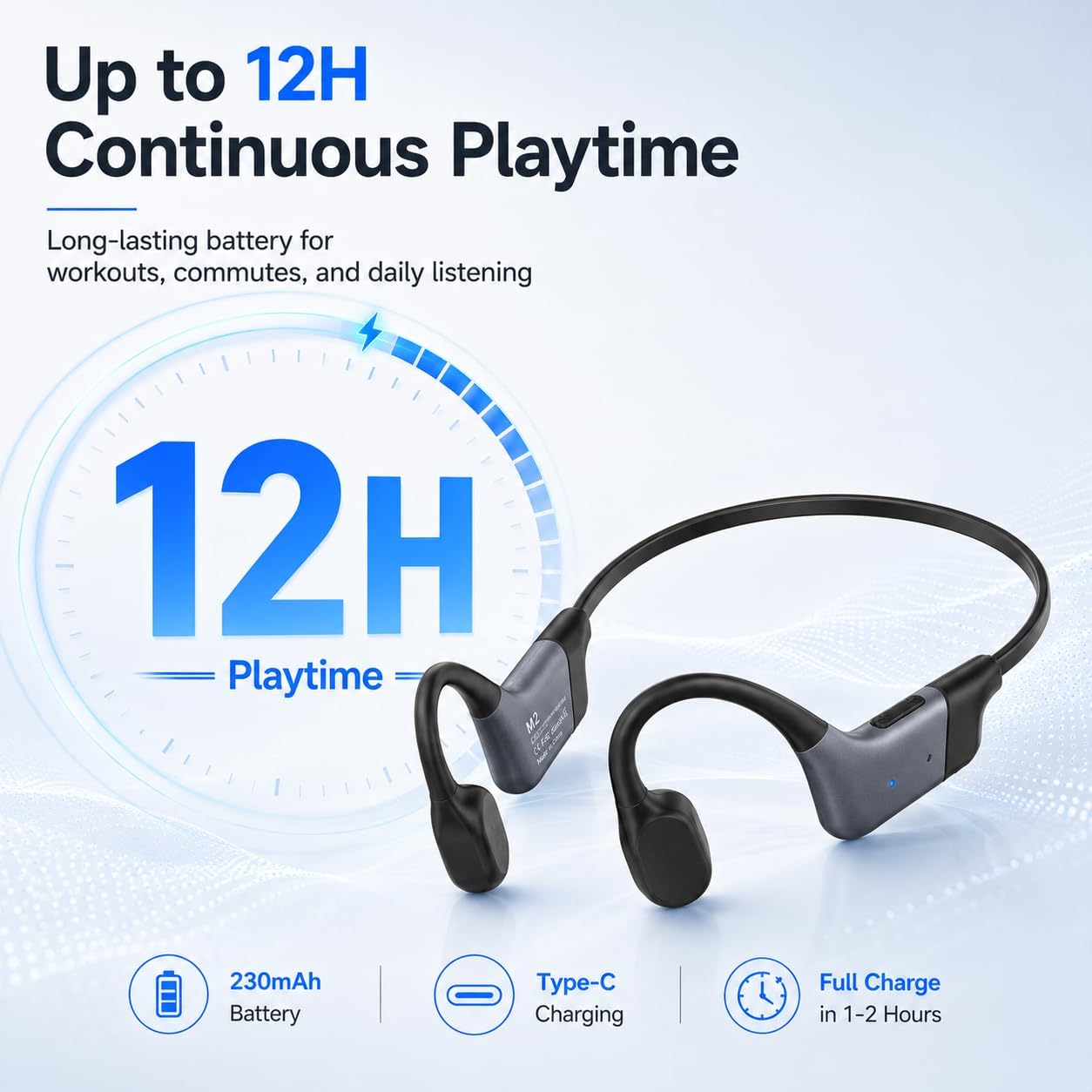
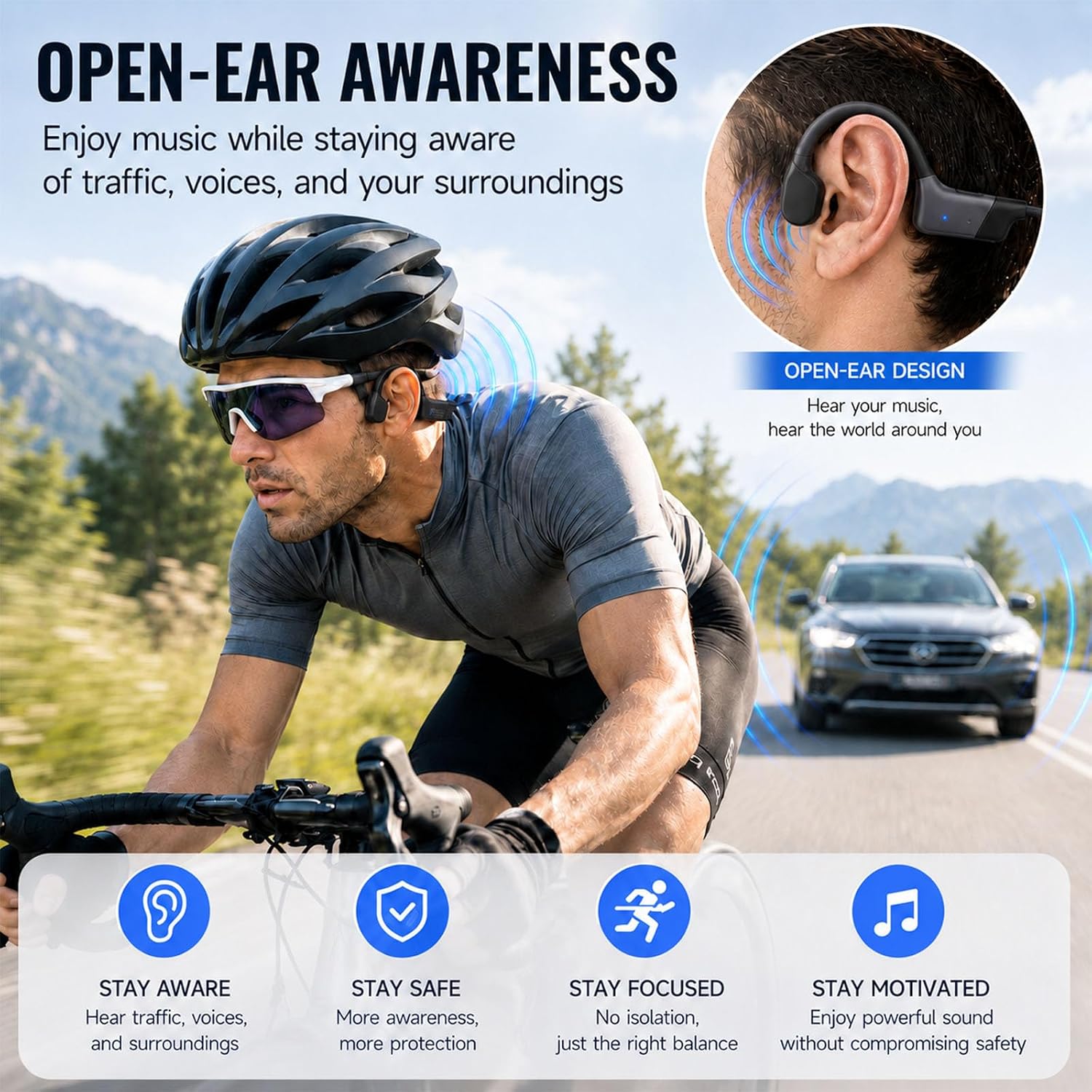
Photographs of the KORAVIS M2 as listed, at the resolution the listing supplies.
What the M2 gets right
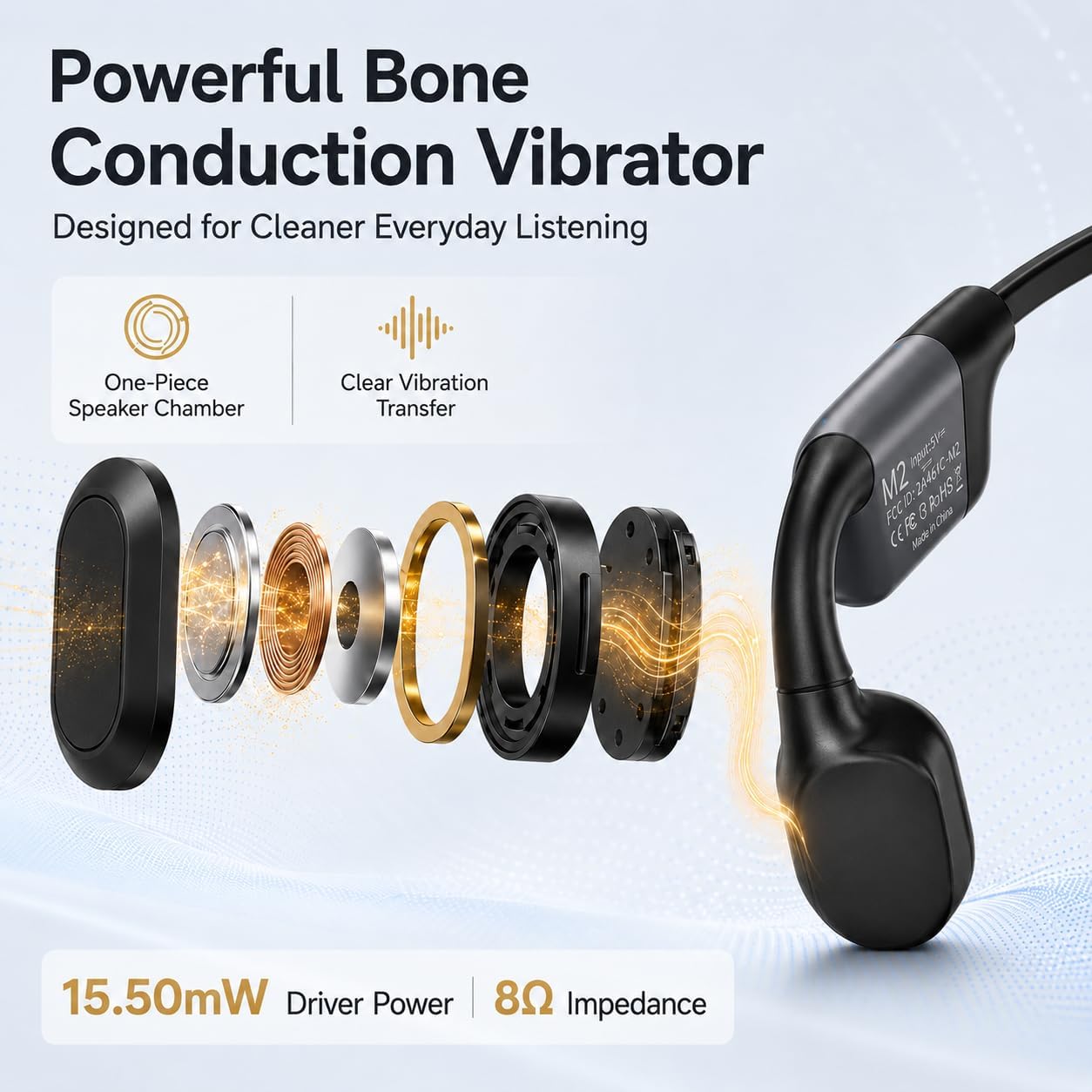
- A 15.5 mm bone conduction driver sends audio through the cheekbone, so your ear canal stays open.
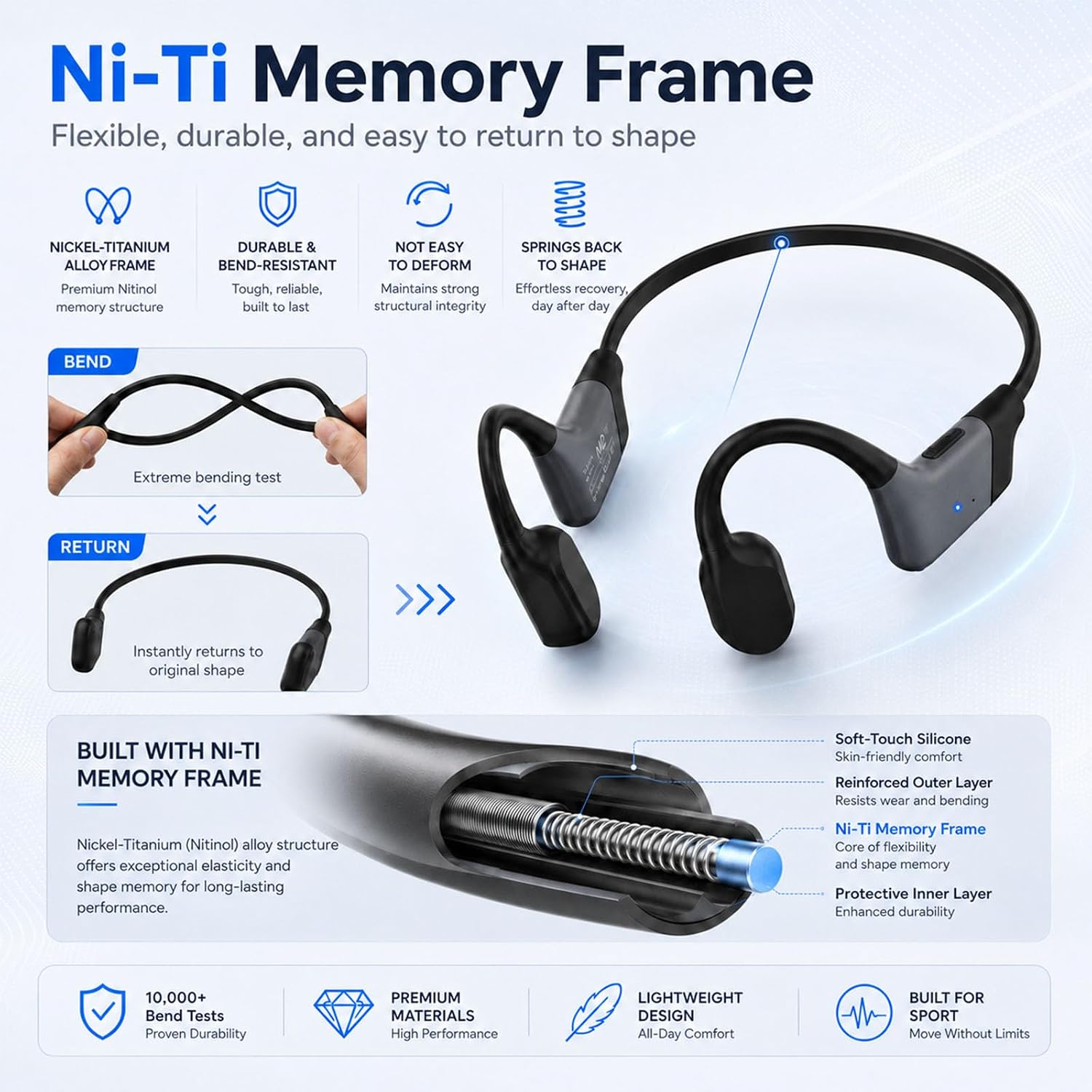
- The nickel-titanium band weighs 25.5 g and is rated for more than 10,000 bend cycles without deforming.
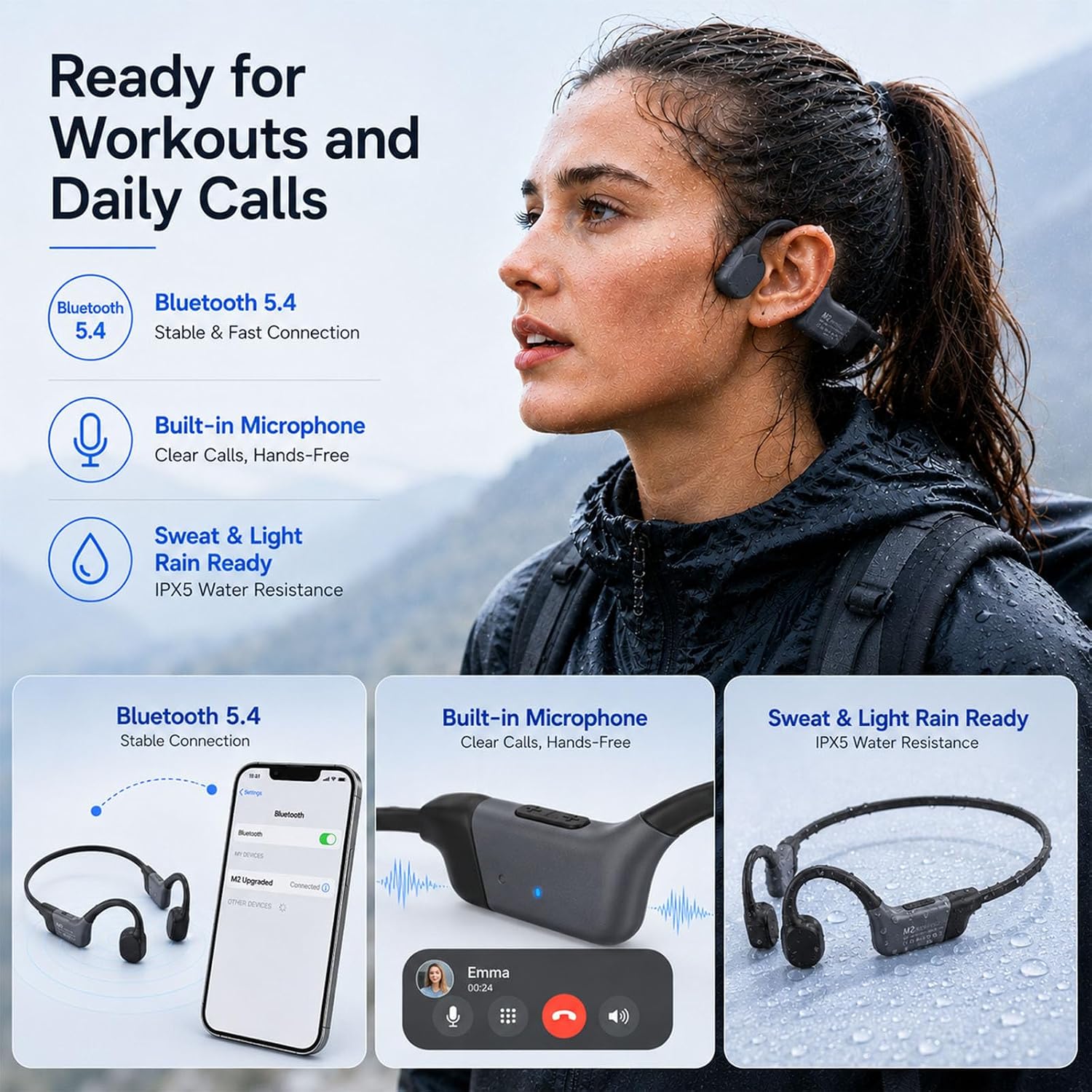
- IPX6 sweat and splash resistance handles rain, sweat and everyday spills — it is not built for swimming.
- 230 mAh battery gives up to 12 hours of playback or calls at standard volume, recharged over USB-C in about two hours.
- Bluetooth 5.4 pairs with phones, tablets and laptops, with a built-in mic for hands-free calls.
What is in the box
- Bone conduction headphones
- Earplugs
- USB charging cable
- User manual
KORAVIS M2 in numbers
Every figure below comes from the model's Amazon listing. Colourways share every value except the finish.
| Model | EL-OH-M2-01 |
|---|---|
| Type | Open-ear bone conduction |
| Driver | 15.5 mm vibration driver |
| Frame | Nickel-titanium memory alloy |
| Weight | 25.5 g |
| Playtime | Up to 12H at standard volume |
| Battery | 230 mAh |
| Charging | USB-C, approx. 2 hours |
| Bluetooth | 5.4, up to 33 ft / 10 m |
| Water resistance | IPX6 |
| Impedance | 8 ohm |
| Microphone | Built in, hands-free calls |
| Colour | Grey-Black |
Who the M2 is for — and who should buy something else
The M2 suits anyone who needs the ear canal to stay clear for hours and expects the session to get wet. Cyclists who need to hear traffic, runners on shared paths, gym users who want a soundtrack without sealing off the room, and people who work in loud spaces and want the supplied earplugs as an option all sit in the M2 lane. The nickel-titanium band returns to shape after being bent, so it tolerates being taken on and off through a day without losing its grip.
Buy a different KORAVIS if you want the lightest frame: the Q1 is 18.2 g against the 25.5 g M2. Buy a different one if eight hours already covers your day — the Q1 does that for less. Choose the M3 instead if you want bone conduction with Type-C charging and IPX5 rather than IPX6.
Be honest about the ceiling. The M2 is not swim-rated: IPX6 handles sweat, rain and splashes, but the frame must never be submerged. Sound quality and call clarity sit below premium open-ear competitors, and that is the real trade-off at this price — you are buying battery, build and open-ear awareness, not the last word in mid-range refinement or call rejection.
- Choose the M2 for 12H playtime, IPX6 and a bend-tolerant 25.5 g frame.
- Choose the Q1 instead for the lowest weight or the lowest price.
- Choose the M3 instead for bone conduction with Type-C charging at IPX5.
- Skip the whole range if you need swimming or premium call clarity.
M2, Q1 and M3 compared — playtime, weight, water, Bluetooth and driver
Run the three frames against each other and the M2 sits in the middle by design. Playtime: the M2 and M3 both run up to 12 hours at standard volume, while the Q1 tops out at 8 hours, the shortest figure in the range. Weight: the 25.5 g M2 band is the only bone-conduction weight published, the Q1 is 18.2 g, and KORAVIS publishes no weight for the M3 — so if a number matters to you, the choice is between the M2 and the Q1.
Water: the M2 carries IPX6, the stronger of the two ratings here, while the Q1 and M3 both carry IPX5. Neither rating includes dust protection or immersion. Bluetooth: the M2 and M3 run 5.4, the Q1 runs 5.3; all three list the same up to 10 m / 33 ft range.
Driver type is the real fork. The M2 and M3 are bone conduction — a 15.5 mm driver on the M2 vibrates through the cheekbone, and the ear canal stays open. The Q1 is air conduction: small drivers aimed at the ear from outside the canal. Air is lighter and often clearer in the mid-range but spills more sound at high volume.
- M2: up to 12H, 25.5 g, IPX6, Bluetooth 5.4, bone conduction.
- Q1: up to 8H, 18.2 g, IPX5, Bluetooth 5.3, air conduction.
- M3: up to 12H, no published weight, IPX5, Bluetooth 5.4, bone conduction.
What the M2 specifications actually mean on your head
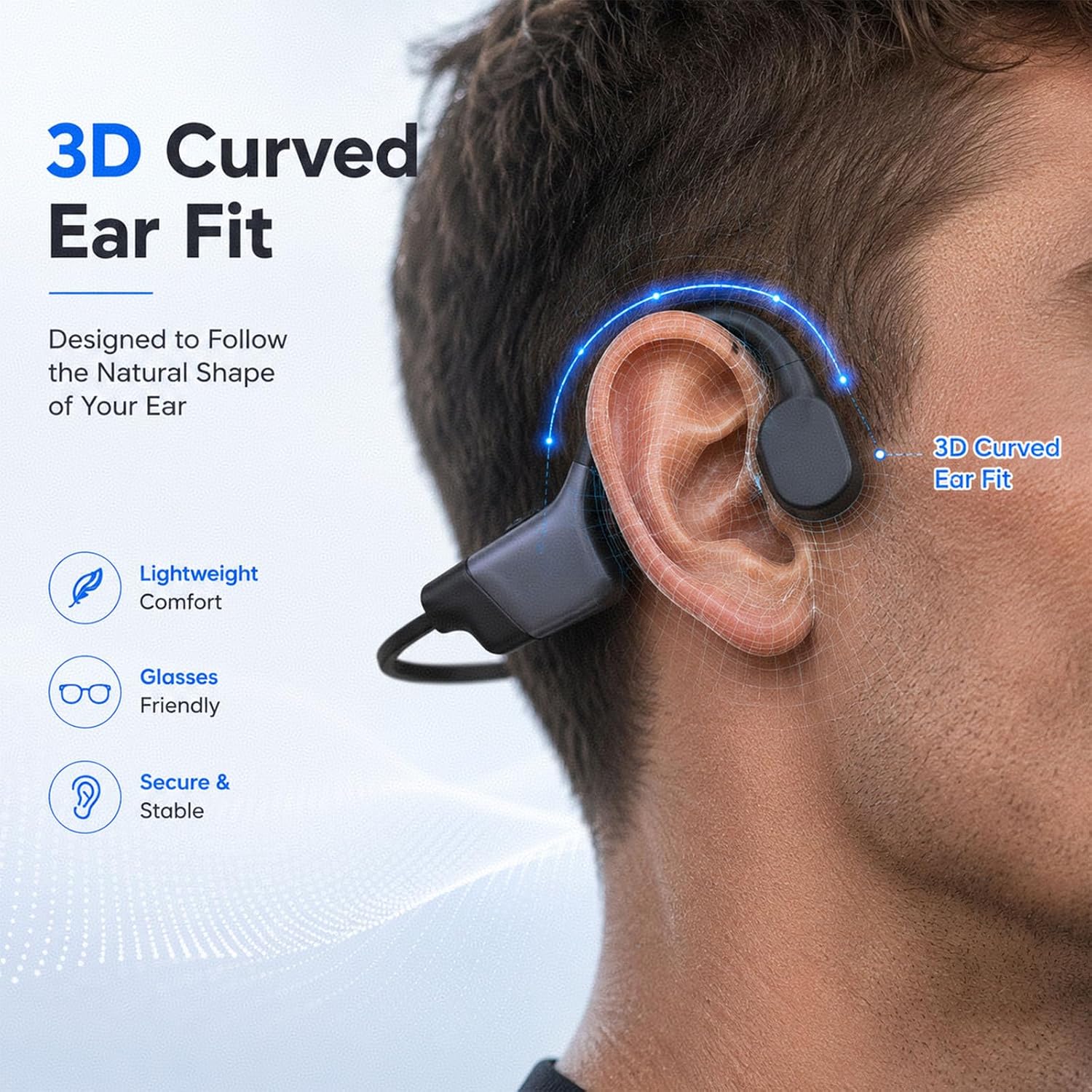
25.5 g spread across a band that rests on the cheekbone and hooks behind the ear is light enough to forget during a first listen, though three hours in you will feel a soft, steady pressure where the driver contacts skin — not the deep canal ache of in-ear buds, but a presence. The open frame also means pressure never builds inside the ear, so long calls do not leave the canal sore.
15.5 mm at 15.50 mW into 8 ohms is a vibration engine sized for speech and rhythm rather than bass depth; expect clear vocals and enough punch at moderate volume rather than chest-thumping low end. The 230 mAh cell is what buys the up-to-12-hour figure at standard volume, and USB-C refills it in one to two hours. Bluetooth 5.4 at up to 10 m / 33 ft lets you leave a phone on a bench or in a bag with a clear line of sight.
IPX6 is water jets at level 6 — a step above the level 5 jets of IPX5 and above IP55 on water alone, though IP55 adds dust protection that IPX6 does not. It does not reach IPX7 or IPX8, which are the immersion ratings. Rain, sweat and a rinse are covered; a swim is not.
The M2 by scenario: running, riding, gym, commuting and calls
Running and cycling play to the strengths of the M2. Because the canal stays open you hear approaching traffic, a passing cyclist or a running partner without pausing playback, which is exactly why open-ear frames exist. IPX6 covers the sweat and the rain you meet outdoors, and the band sits above the ear, so a helmet or cap can usually fit around it.
In the gym, the open design keeps you aware of machines, announcements and the room without sealing you off. It is a training frame, not a pool frame — the M2 is not swim-rated, so leave it in the locker for the water portion. Outdoors in heavy rain you are still within IPX6; submerged, you are not.
Commuting and calls are the softer use. Bluetooth 5.4 holds a stable link to a phone, tablet or laptop at up to 10 m / 33 ft, and the built-in mic keeps hands-free calls working while you walk. Call clarity tracks the budget position of the M2 rather than a premium level, so quiet rooms flatter it and windy streets do not. In genuinely noisy places, the supplied earplugs make the driver easier to hear over background sound.
Care, charging and making the M2 last
Every lithium cell ages, and 230 mAh is small enough that habits show up in the runtime. Charging to full each night and leaving it on the cable for days, or running it flat every single cycle, both shorten the years you get from the battery. Partial top-ups and keeping the frame out of a hot car or a sun-baked dash protect the cell between sessions.
The charging port is the part sweat attacks first. Salt and moisture collect on USB-C contacts, corrode them and blur the connection, so wipe the frame dry after a sweaty run and let the port air out before plugging in. A damp port plus a charger is the fastest way to end the life of a frame early.
The nickel-titanium memory frame is rated for more than 10,000 bend cycles without deforming, so the structure will outlast the battery by a wide margin. That imbalance is normal for bone conduction: the band, the hooks and the driver are the durable half, the cell is the wear item. Treat the port well and the M2 should keep its shape long after the runtime has quietly shrunk.
KORAVIS M2 — frequently asked
Can I wear the M2 in the rain?
Yes. The M2 carries an IPX6 rating, which covers sweat, rain and everyday splashes. Wipe it dry after use. It is not designed for swimming or underwater use.
How long does a full charge take?
About two hours over USB-C for up to 12 hours of playback at standard volume. Loud volumes and long calls reduce that figure.
Does it work with glasses or sunglasses?
The band sits above the ear rather than inside it, so it generally sits comfortably alongside eyewear. The ear hook rests behind the ear.
Will people around me hear my music?
Bone conduction keeps sound leakage low at everyday listening volumes, because the driver vibrates against the cheekbone instead of firing into open air.
Compare with the other models
Same open-ear idea, different trade-offs on weight, battery and water resistance.
| Specification | KORAVIS M2 | KORAVIS Q1 | KORAVIS M3 |
|---|---|---|---|
| Type | Open-ear bone conduction | Open-ear air conduction | Open-ear bone conduction |
| Weight | 25.5 g | 18.2 g | Not published |
| Playtime | Up to 12H at standard volume | Up to 8H | Up to 12H |
| Bluetooth | 5.4, up to 33 ft / 10 m | 5.3, up to 33 ft / 10 m | 5.4 |
| Water resistance | IPX6 | IPX5 | IPX5 |
| Charging | USB-C, approx. 2 hours | USB, approx. 3 hours | USB Type-C |
| In the box | Bone conduction headphones, Earplugs, USB charging cable, User manual | Air conduction headphones, USB charging cable, User manual | Bone conduction headphones, Earplugs, USB charging cable, User manual |
See every model and colourway side by side
- Q1 Open Ear Air Conduction Running Headphones — The lightest frame we make: 18.2 g, air-conduction drivers, and an 8H battery.
- M3 Open-Ear Bone Conduction Headphones — Bone conduction with up to 12H playtime and IPX5 protection, charged over Type-C.
Buy the KORAVIS M2 on Amazon
The listing carries the live price, current availability and customer reviews, and your order is covered by Amazon's delivery and returns.